



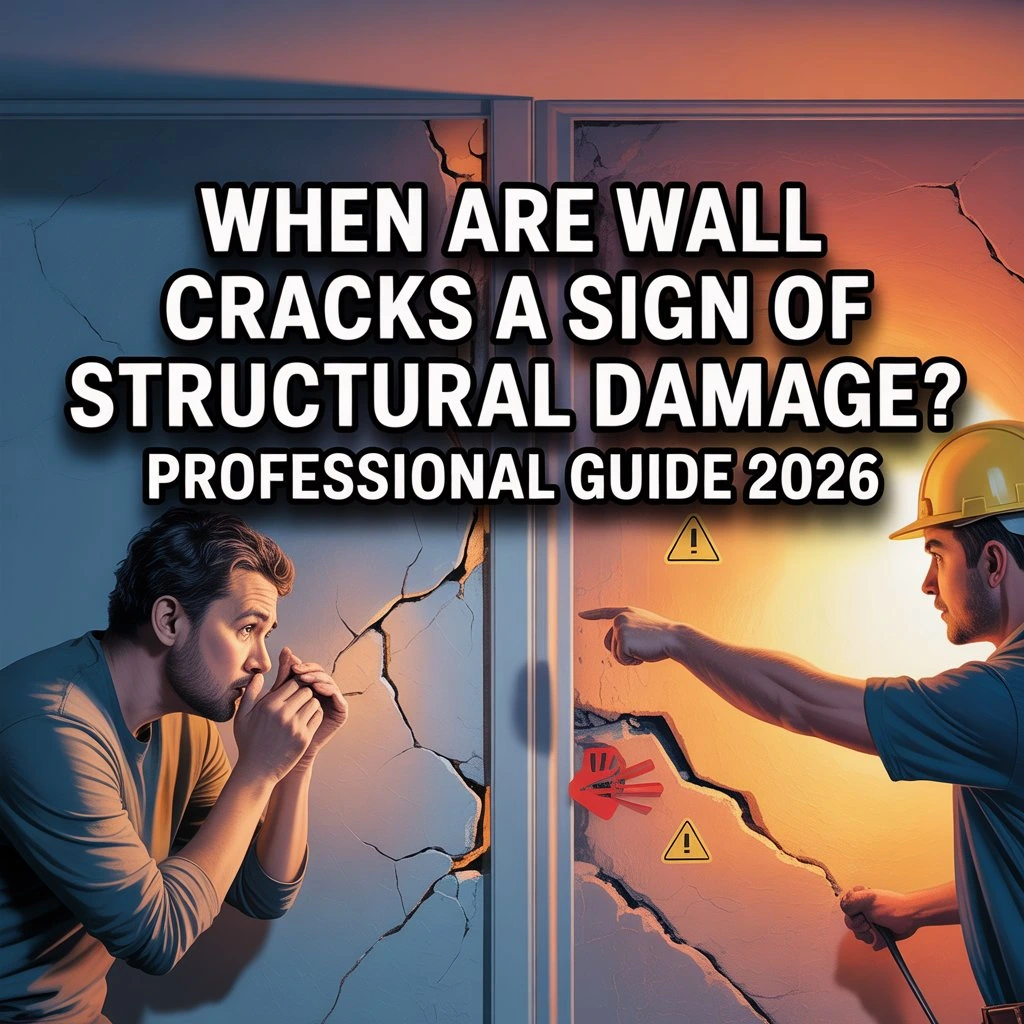
When are wall cracks a sign of structural damage? The simplest and most direct answer is this. A crack wider than five millimetres, one that continues to grow, runs horizontally across a load-bearing wall, or appears alongside issues like sticking doors and uneven floors, should never be ignored. These are warning signs that call for professional assessment. Everything else requires a more careful look, and that is exactly what this guide will help you do.
Most property owners across the United Kingdom have faced this moment at least once. You notice a crack on the wall and pause, unsure whether it is something minor or something serious. It is one of the most common concerns in homes across Essex and London, yet it is often misunderstood.
The real challenge is not spotting a crack. It is understanding what that crack actually means. Some cracks look dramatic but turn out to be cosmetic. Others seem small at first but point to deeper structural movement. Without experience, it is easy to misjudge both.
This guide has been prepared by James Hartley MRICS, a Chartered Building Surveyor at Structura Surveying, drawing on more than fifteen years of experience assessing properties throughout Essex and London. The aim is simple. Help you understand the difference between harmless surface cracking and signs of structural concern.
Why Walls Crack in the First Place
Before deciding whether a crack is serious, it helps to understand why cracks appear at all. Buildings are not completely static. They respond to their environment in subtle ways over time.
The ground beneath a property can shift slightly as moisture levels change. This is especially relevant in areas with clay soil, which is common across Essex and London. When the ground moves, the structure above adjusts, and that movement often shows itself as cracking.
Materials also behave differently depending on temperature and humidity. Brick, plaster, timber, and mortar all expand and contract at different rates. Where these materials meet, small cracks can develop naturally.
New builds and recently extended properties are particularly prone to this kind of movement. As the structure settles under its own weight, minor cracks can appear. In many cases, these stabilise and require nothing more than cosmetic repair. In other cases, the cracks continue to develop, which is when closer inspection becomes important.
Understanding Crack Severity
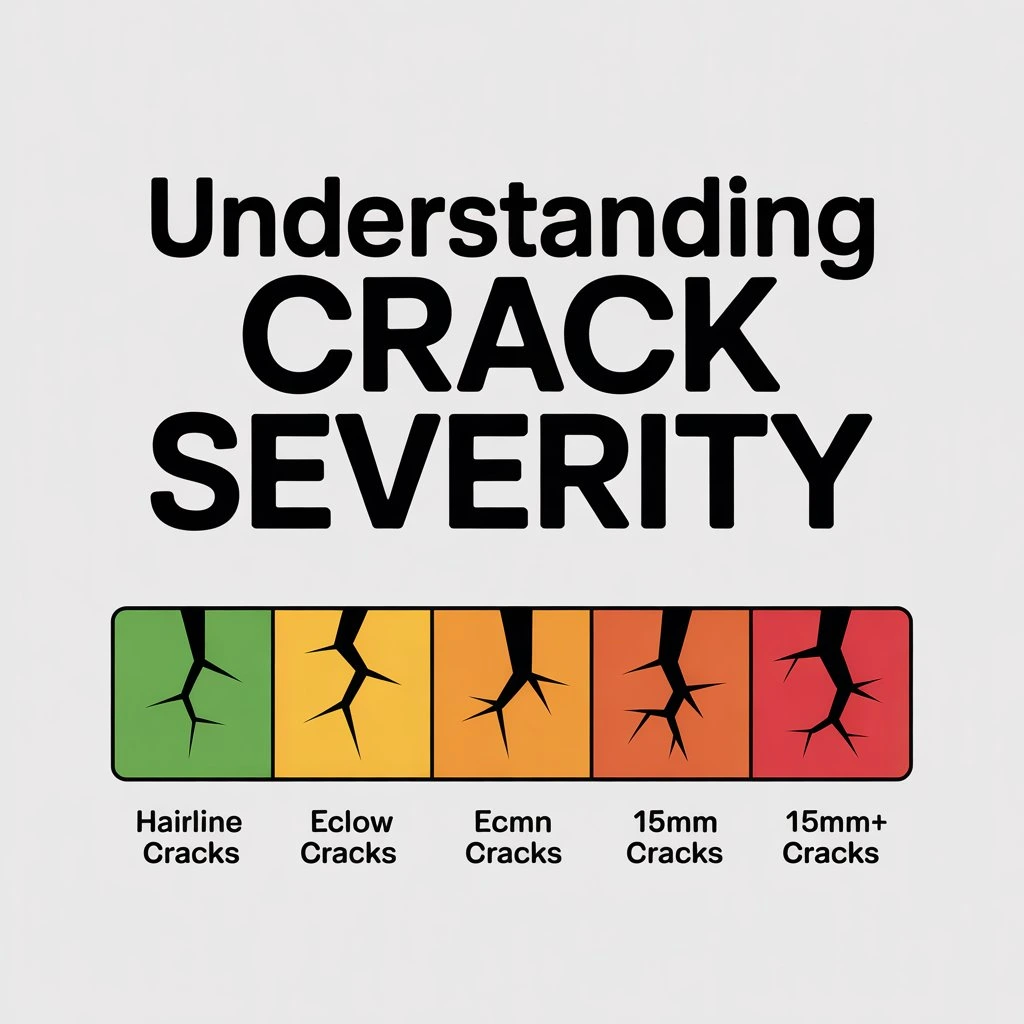
In the United Kingdom, surveyors often rely on guidance developed by the Building Research Establishment to assess crack severity. This framework helps distinguish between minor cosmetic issues and structural damage.
Hairline cracks under 0.1 millimetres are generally insignificant and need no action. Fine cracks up to one millimetre are usually cosmetic and easily repaired. Cracks up to five millimetres may require minor work but are not typically structural.
Once cracks exceed five millimetres, the situation changes. These can indicate structural movement and should be investigated. Wider cracks, especially those approaching fifteen millimetres or more, suggest more serious issues and may require structural engineering input.
It is important to understand that width alone does not tell the whole story. The direction, pattern, and location of a crack often reveal far more about what is happening within the structure.
Types of Wall Cracks and What They Suggest
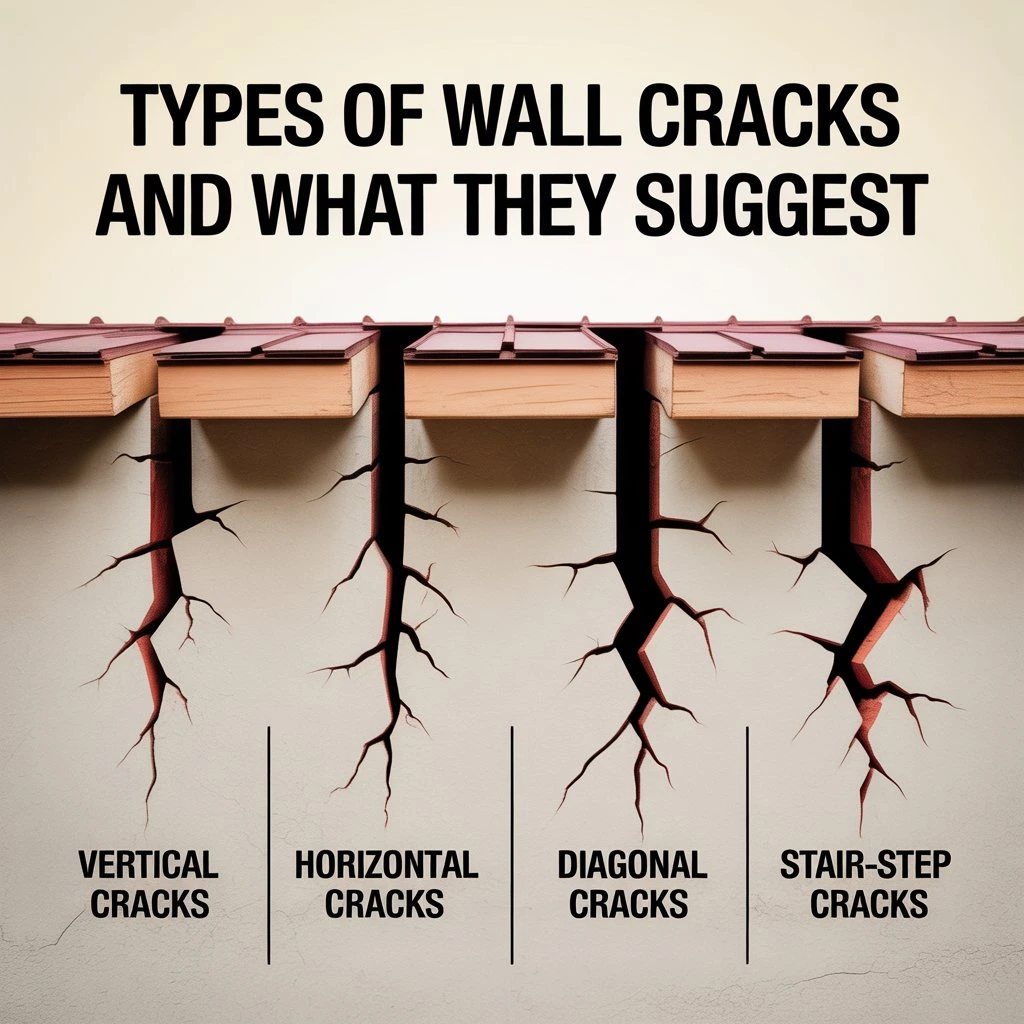
Vertical cracks are among the most common. When they are narrow and stable, they are usually linked to normal settlement or slight thermal movement. However, if a vertical crack is wider at one end or appears around openings like doors and windows, it may point to uneven foundation movement.
Horizontal cracks are more concerning. When a crack runs horizontally along a wall, especially at ground level or in a basement, it can indicate pressure against the wall. In some cases, this suggests the wall is beginning to move inward, which is a structural issue that should be assessed without delay.
Diagonal cracks often appear near window and door corners. A single diagonal crack is quite common and can be linked to minor settlement. Multiple diagonal cracks, or cracks that widen at one end, may indicate ongoing subsidence.
Stair step cracks follow the pattern of mortar joints in brickwork. These are often associated with foundation movement. They are sometimes dismissed as cosmetic, but in many cases they are a sign that different parts of the building are moving at different rates.
When Wall Cracks Become a Clear Warning Sign
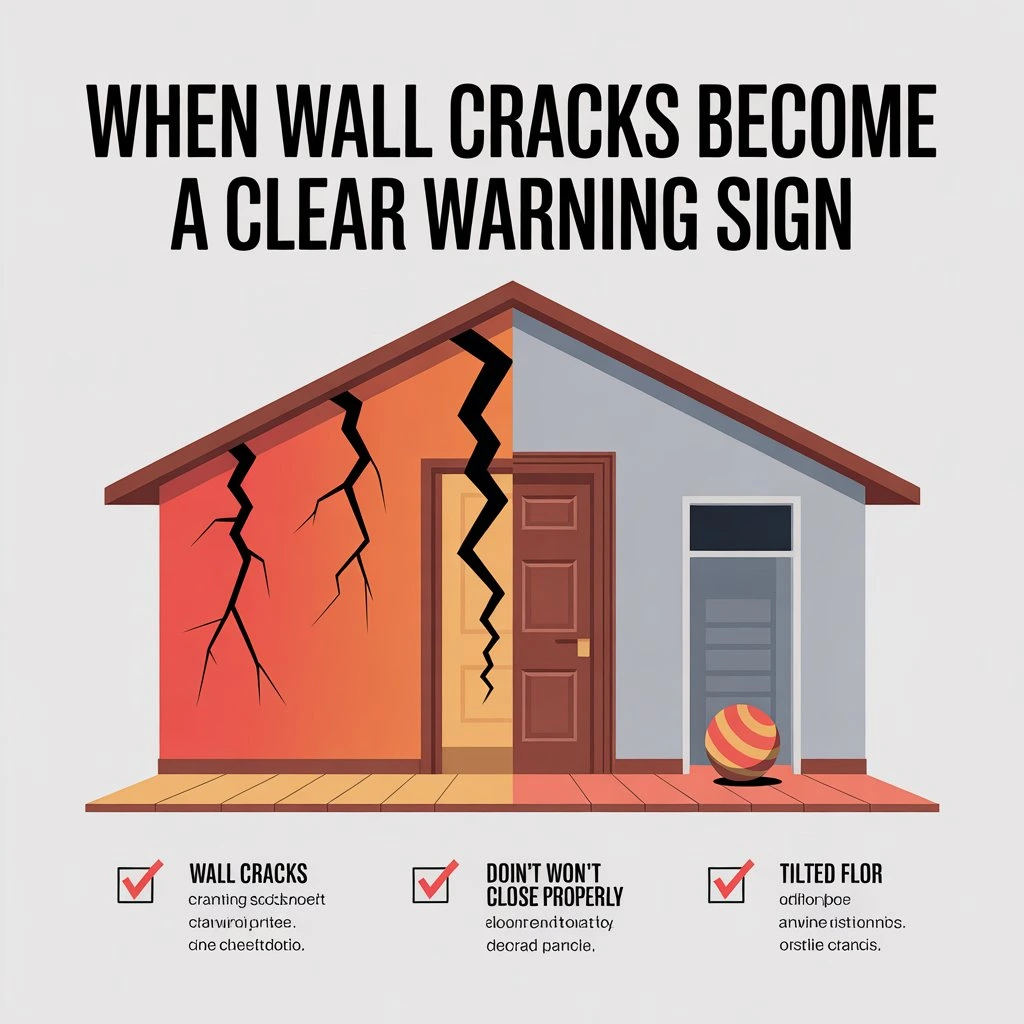
Certain characteristics should always raise concern. One of the most important is movement over time. If a crack is growing, it is not stable. A simple way to check this is to mark the ends of the crack and revisit it after a few weeks. If it has extended, it needs professional attention.
Cracks that appear after extreme weather can also be significant. Prolonged dry periods can cause clay soil to shrink, while excessive moisture can lead to expansion. Both can affect foundations and result in structural movement.
It is rarely just one symptom that tells the full story. Cracks combined with sticking doors, uneven floors, or gaps between walls and ceilings usually indicate a broader issue. When multiple signs appear together, the likelihood of structural movement increases.
Cracks that pass through the entire thickness of a wall should never be ignored. These indicate that the wall has fully separated along that line, which affects both strength and weather resistance.
The Role of a Professional Defect Survey
When there is genuine concern, a defect survey provides clarity. This is a focused inspection carried out by a chartered surveyor to determine the cause of the problem and recommend the next steps.
At Structura Surveying, defect surveys are carried out across Essex and London for both residential and commercial properties. Each inspection looks beyond the surface. The structure, materials, age of the building, and pattern of cracking are all carefully considered.
The result is a clear written report explaining what has been found, what it means, and what should be done next. This kind of documentation is also valuable for insurance purposes and property transactions.
Simply filling cracks without understanding their cause can make future assessment more difficult. It can hide the symptoms without addressing the problem.
Wall Cracks and Insurance Considerations
In many cases, cracking linked to subsidence may be covered by buildings insurance. However, insurers require clear evidence. They need to know that the damage is due to structural movement rather than normal settlement.
Professional reports play a key role here. Without them, claims may be reduced or even rejected. Proper documentation ensures that the extent of the issue is accurately understood.
When a Full Building Survey Is Needed
If cracks are discovered during a property purchase, a full building survey is often the best course of action. This type of survey provides a detailed assessment of the entire property and highlights any structural concerns.
A thorough report allows buyers to make informed decisions. In some cases, it can support renegotiation. In others, it may highlight risks that were not initially obvious.
Frequently Asked Questions
When should I be worried about cracks in my walls
You should take cracks seriously if they are wider than five millimetres, increasing in size, running horizontally, or appearing alongside other signs such as sticking doors or uneven floors.
What is the difference between a settlement crack and a structural crack
Settlement cracks are usually small, stable, and cosmetic. Structural cracks tend to be wider, progressive, and linked to ongoing movement within the building.
Can a surveyor confirm if a crack is serious
Yes. A chartered surveyor can assess the cause, measure severity, and provide clear recommendations through a defect survey.
Does insurance cover wall cracks
Insurance may cover cracks caused by subsidence, but proper professional evidence is required to support a claim.
How can I tell if a crack is getting worse
Mark the ends of the crack and check again after a few weeks. If it has grown, it should be professionally assessed.
Conclusion
Not all wall cracks are a cause for concern, but some should never be ignored. The difference lies in understanding what the crack represents.
Width, direction, location, and movement over time all matter. These details help determine whether a crack is cosmetic or structural.
The safest approach is always to assess early. Identifying the cause at an early stage can prevent more serious and costly problems later.
With extensive experience across Essex and London, Structura Surveying provides clear, professional guidance based on real inspection and practical knowledge. That clarity allows property owners to act with confidence rather than uncertainty.
Contact Us
If you have noticed cracks in your property, it is worth taking a closer look before making assumptions. What appears minor today can develop into something more significant over time.
Structura Surveying provides professional defect surveys, building surveys, and structural assessments across Essex and London. Each report is clear, practical, and based on real inspection rather than guesswork.
Get in touch with Structura Surveying to arrange your survey and gain a proper understanding of what your property is telling you.