



If you’re dealing with a boundary dispute, the first question on your mind is probably not about property law. It’s about money. Specifically, who actually pays for a boundary dispute survey in the UK, and what happens if your neighbour refuses to contribute?
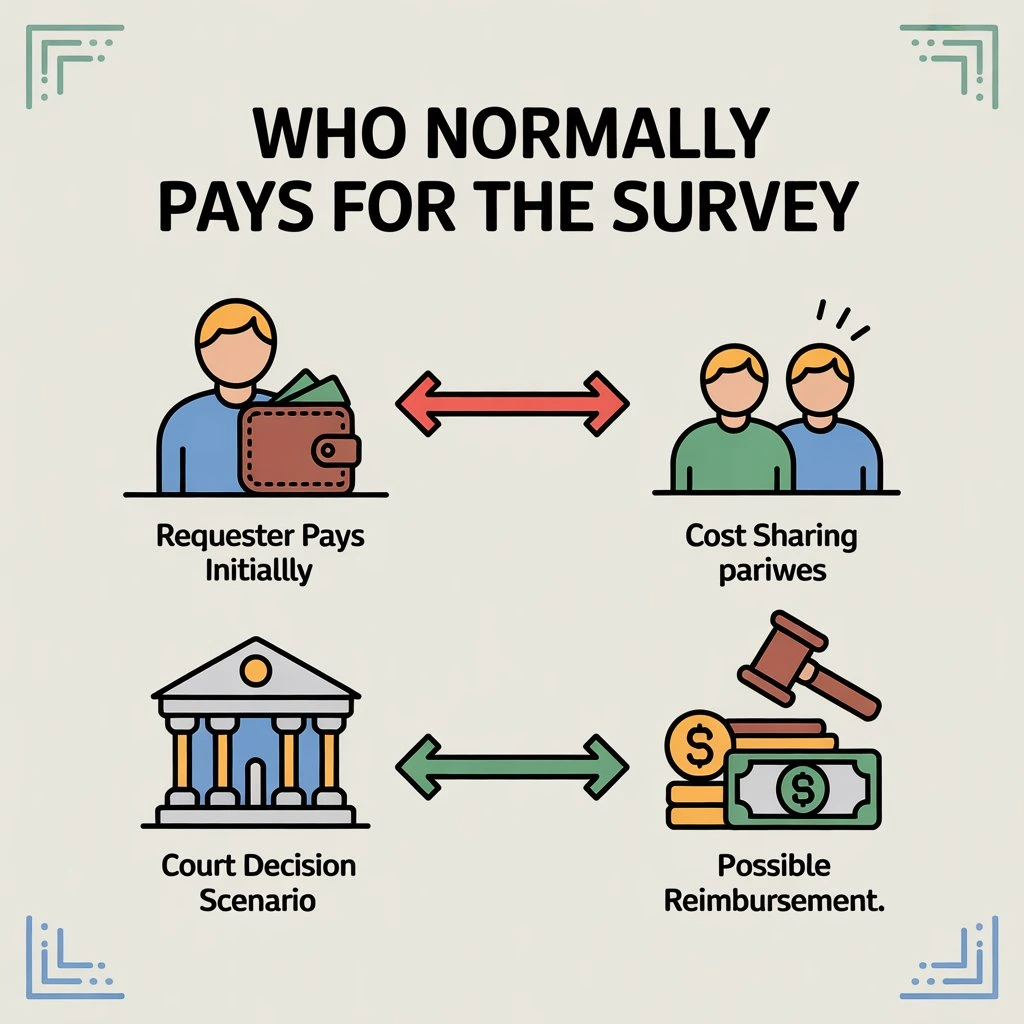
The short answer is that the person who instructs the surveyor pays the initial cost. But in fifteen years of handling boundary disputes across England and Wales, we’ve seen that initial payment shift hands more times than most property owners expect. Courts reassign costs. Settlements include reimbursement. Neighbours who originally refused to share expenses end up footing the entire bill. The outcome depends almost entirely on the quality of your evidence and how early you act.
Structura Surveying is a RICS-regulated firm specialising in boundary dispute surveys across England and Wales. Our lead surveyors hold RICS accreditation and carry full professional indemnity insurance. Every report we produce is prepared to court-admissible standards, drawing directly from HM Land Registry title plans and Ordnance Survey mapping data. We’ve handled disputes involving simple fence encroachments, complex multi-party title deed conflicts, and everything in between.
Why Boundary Disputes Happen
Your property boundary doesn’t exist on the ground. There’s no painted line, no automatic marker, nothing either neighbour can point to and say with certainty: that’s the edge of my land. Legal boundaries live in title deeds, filed plans, and the records held at HM Land Registry, and those records are sometimes decades old, occasionally ambiguous, and frequently misread by both sides.
A fence installed by a previous owner thirty years ago is not evidence of the legal boundary. Neither is a hedge, a wall, or a strip of paving that’s been there as long as anyone can remember. Informal agreements between past owners rarely make it into the official title documents. When a property changes hands, those unrecorded understandings disappear with the people who made them. That’s when disputes surface, often years or decades after the original error was made. A RICS-regulated boundary surveyor resolves that uncertainty by reading your title deeds against Ordnance Survey data and taking precise measurements on site.
Who Normally Pays for the Survey
There is a meaningful difference between a surveyor and a RICS-regulated surveyor, and in a boundary dispute, that difference can determine whether your evidence is taken seriously. RICS accreditation means the surveyor operates under a published code of conduct, carries mandatory professional indemnity insurance, and produces reports to a standard that courts, tribunals, and solicitors recognise as authoritative. An unaccredited report, however detailed it appears, carries no equivalent weight.
At Structura Surveying, our boundary dispute reports are produced by RICS-accredited professionals working from HM Land Registry title plans, Ordnance Survey data, and direct site measurement. Where the Party Wall Act 1996 is relevant, for instance, where a shared boundary wall or structure is part of the dispute, we advise on that legislative framework as part of our service. Our reports have been used in County Court proceedings, First-tier Tribunal hearings, and solicitor-led negotiations across England and Wales.
How to Handle a Boundary Dispute

A boundary dispute survey is only as reliable as the professional who performs it. In the US, it is essential to work with a licensed and experienced surveyor who understands both legal land records and field measurement techniques.
A professionally prepared report provides clear documentation that can be used in negotiations, insurance matters, or court proceedings. It also helps prevent further disagreement by establishing an objective reference point.
Structura Surveying focuses on delivering accurate and detailed boundary analysis to help property owners resolve disputes with confidence and clarity.
How to Handle a Boundary Dispute
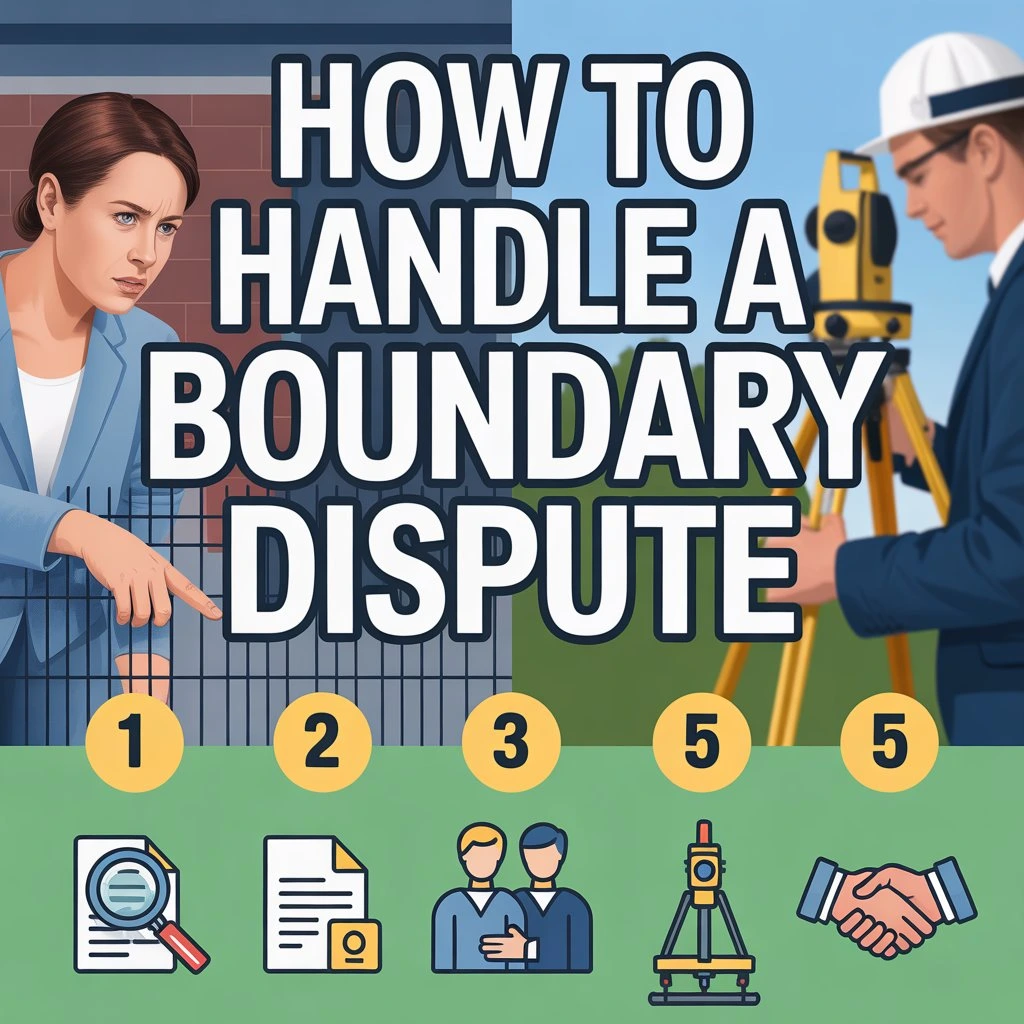
Start with your documents, not your emotions. Retrieve your title deeds, pull up your HM Land Registry title plan online, and study the field plan carefully before you say anything to your neighbour. A significant proportion of property line disputes in the UK dissolve at this stage because one party discovers they’ve been reading the boundary incorrectly all along. It costs nothing to check, and it might resolve everything.
If the documents leave you uncertain, or your neighbour disputes what they clearly show, instruct a RICS-regulated boundary surveyor before the situation escalates further. Don’t wait until solicitors are involved on both sides and positions have become fixed. The earlier a professional survey is commissioned, the more options both parties have and the lower the total cost of resolution is likely to be. We’ve seen disputes that dragged on for four years and cost both parties over £20,000 in combined legal and survey fees. Every one of those cases would have been cheaper to resolve in the first three months.
Frequently Asked Questions
Who pays for a boundary dispute survey in the UK?
The person who instructs the surveyor pays the initial cost. You do not need your neighbour’s agreement or participation to commission a boundary dispute survey on your own property in England and Wales. If the survey supports your claim, your boundary dispute solicitor can pursue recovery of those costs through negotiation or via a court or tribunal order.
How much does a boundary survey cost in the UK?
The cost of a boundary dispute survey in the UK varies depending on the complexity of the case, the size of the site, and how much historical title research is involved. The most reliable way to understand what your specific dispute will require is to contact a RICS-regulated surveyor directly for a professional assessment.
Is a boundary survey legally binding in the UK?
A boundary survey carried out by a RICS-regulated surveyor is not itself a court order and cannot compel your neighbour to accept its findings. It is authoritative expert evidence that courts and the First-tier Tribunal (Property Chamber) rely upon when making binding determinations about property boundaries in England and Wales.
Do all boundary disputes require a survey?
Not always. Where both neighbours agree on the boundary location and the HM Land Registry title plan is unambiguous, a formal survey may not be necessary. In any contested property line dispute in the UK where the boundary is genuinely unclear or where one party denies the other’s claim, a professional boundary dispute survey is the most reliable and cost-effective way to establish the facts.
Conclusion
The person who commissions a boundary dispute survey in the UK pays for it first. That much is straightforward. What happens next depends on the quality of the evidence that survey produces, the conduct of both parties, and the jurisdiction in which any legal proceedings take place. Get the survey right and instruct a RICS-regulated professional, and that initial investment has a strong chance of coming back to you through settlement, negotiation, or a tribunal cost order.
Don’t wait for the dispute to reach the point where both sides have solicitors and neither can afford to back down. Early professional evidence is cheaper, faster, and more effective than anything that comes after it.
Contact Structura Surveying
Structura Surveying provides boundary dispute surveys, building surveys, and defect analysis services to property owners across England and Wales. Our reports are produced by RICS-accredited surveyors to court-admissible standards, drawing on HM Land Registry title plans and Ordnance Survey mapping data.
Contact Structura Surveying today to arrange your boundary dispute survey and get clarity on where your property boundary actually lies.