


If you’ve recently experienced property damage caused by a fire, flood, storm, or another unexpected event, dealing with the insurance claim can quickly become stressful. From arranging inspections and speaking with loss adjusters to managing contractors and keeping repairs on schedule, the entire process can feel overwhelming.
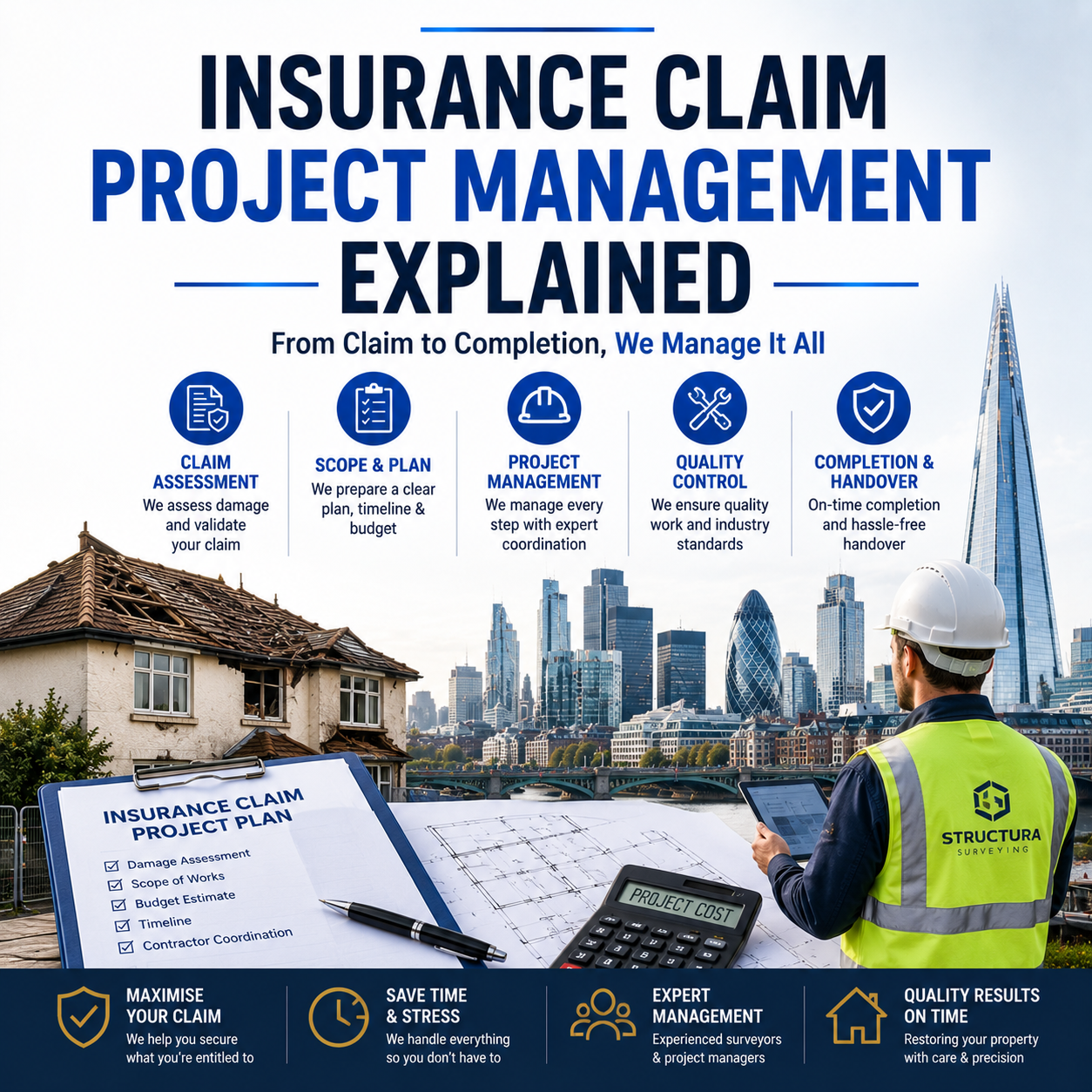
Insurance Claim Project Management Explained is all about making that process easier for property owners. Instead of handling everything yourself, a professional project manager oversees every stage of the insurance claim—from the initial damage assessment to the completion of repairs. Their role is to coordinate the right experts, keep the project on track, manage communication with insurers and contractors, and help ensure your property is restored as efficiently as possible.
In this guide, we’ll explain Insurance Claim Project Management Explained in simple terms, including how the process works, the documents involved, common challenges homeowners face, and why professional project management can save you time, reduce stress, and help achieve a smoother insurance claim experience
How Claim Project Managers Assess and Manage a Claim
Managing an insurance claim properly involves far more than simply filing paperwork. It’s a structured process that requires attention to detail at every stage.
Initial Damage Assessment
The process usually begins with a thorough assessment of the damage. A project manager, often working alongside a loss assessor or surveyor, inspects the property to understand the full scope of what’s been affected, not just the obvious damage, but anything that might be uncovered once repairs begin.
Reviewing the Policy in Detail
Next, the project manager reviews the insurance policy closely to understand exactly what’s covered, what the limits are, and what documentation the insurer will require. This step is crucial, as claims are sometimes underpaid or delayed simply because supporting evidence wasn’t presented clearly.
Building and Presenting the Claim
The project manager then puts together a detailed claim, including cost estimates, damage reports, and photographic evidence. This is presented to the insurer or loss adjuster in a clear, organised way designed to support the strongest possible outcome for the policyholder.
Managing Repairs and Contractors
Once the claim is agreed, the project manager coordinates the repair work itself, liaising with contractors, checking quality, and keeping the project on schedule. This means the policyholder doesn’t have to manage tradespeople or chase progress themselves.
Ongoing Communication and Negotiation
Throughout the process, the project manager acts as the main point of contact between the policyholder and the insurer, handling negotiations, answering queries, and pushing back where necessary if an offer doesn’t reflect the true cost of repairs.
Tools and Documents Used in Claim Management
Successful claim management relies on solid documentation and the right tools at every stage.
- Insurance Policy Documents – The foundation for understanding coverage, exclusions, and claim limits.
- Damage Assessment Reports – Detailed records describing the extent and cause of the damage.
- Photographic and Video Evidence – Visual proof that supports the claim and helps avoid disputes later.
- Cost Estimates and Schedules of Work – Clear, itemised breakdowns of what repairs will involve and cost.
- Correspondence Records – A documented history of all communication with the insurer, useful if a dispute arises.
- Project Management Software – Used to track timelines, contractor schedules, and claim milestones.
- Building Surveys – Sometimes required for structural damage, to confirm the full scope of repair work needed.
Having these ready and well-organised often makes the difference between a claim that moves quickly and one that stalls.
Common Issues That Arise During Insurance Claims
Even straightforward claims can run into a few recurring problems.
Underestimated Damage Initial assessments sometimes miss damage that only becomes visible once repair work starts, leading to claim revisions later on.
Policy Coverage Confusion Policyholders aren’t always clear on what their policy actually covers, which can lead to disappointment or disputes over payouts.
Slow Insurer Response Times Claims can stall simply due to delays in communication or processing on the insurer’s side.
Disputes Over Repair Costs Insurers and policyholders sometimes disagree on what a fair repair cost looks like, especially for older or unusual properties.
Contractor Coordination Problems Without proper oversight, repair work can be delayed or poorly managed, extending the time it takes to get life back to normal.
Incomplete Documentation Missing photos, receipts, or damage reports can weaken a claim and lead to lower payouts or unnecessary back-and-forth with the insurer.
Benefits of Professional Insurance Claim Project Management
Bringing in a professional to manage a claim offers real, practical advantages.
- Stronger, Fairer Claims – A well-documented, professionally presented claim is more likely to receive a fair settlement.
- Reduced Stress – Policyholders don’t have to navigate complex paperwork or negotiations alone.
- Faster Resolution – Experienced project managers know how to keep claims moving and avoid common delays.
- Expert Contractor Oversight – Repairs are managed properly, reducing the risk of poor workmanship or missed deadlines.
- Better Financial Outcomes – Professionals often identify costs or damage that might otherwise be overlooked, protecting the policyholder’s interests.
- One Clear Point of Contact – Instead of juggling insurers, adjusters, and contractors separately, everything is managed through a single, coordinated process.
Conclusion
Insurance claim project management takes the complexity and stress out of what can otherwise be a long, confusing process. From the initial damage assessment through to the final repair, having an experienced professional manage the claim helps ensure a fair outcome, faster progress, and far less hassle for the policyholder. If you’re facing a significant insurance claim, working with a dedicated project manager can make a meaningful difference to both the result and your peace of mind.
Frequently Asked Questions
- What does an insurance claim project manager actually do? They oversee the entire claims process, from damage assessment and documentation through to negotiating with the insurer and managing repair work.
- Do I need a project manager for a small insurance claim? For minor claims, it may not be necessary, but for larger or more complex claims, professional management often leads to a smoother, fairer outcome.
- How does claim project management help speed up the process? By keeping documentation organised, communication consistent, and contractors coordinated, project managers help avoid the delays that often slow claims down.
- Can a project manager help if my insurer’s offer seems too low? Yes, part of their role is to review settlement offers and negotiate on the policyholder’s behalf if the offer doesn’t reflect the true cost of repairs.
- What documents should I keep ready when starting an insurance claim? It’s helpful to have your policy documents, photographic evidence of the damage, and any related receipts or reports ready from the start.
- Does using a claim project manager cost extra on top of my insurance premium? Fees vary depending on the service provider and claim size, so it’s worth discussing costs upfront before starting the process.
- How long does a typical insurance claim take to resolve? Timelines vary widely depending on the complexity of the damage and the insurer’s response times, but professional management often helps keep the process on track.