


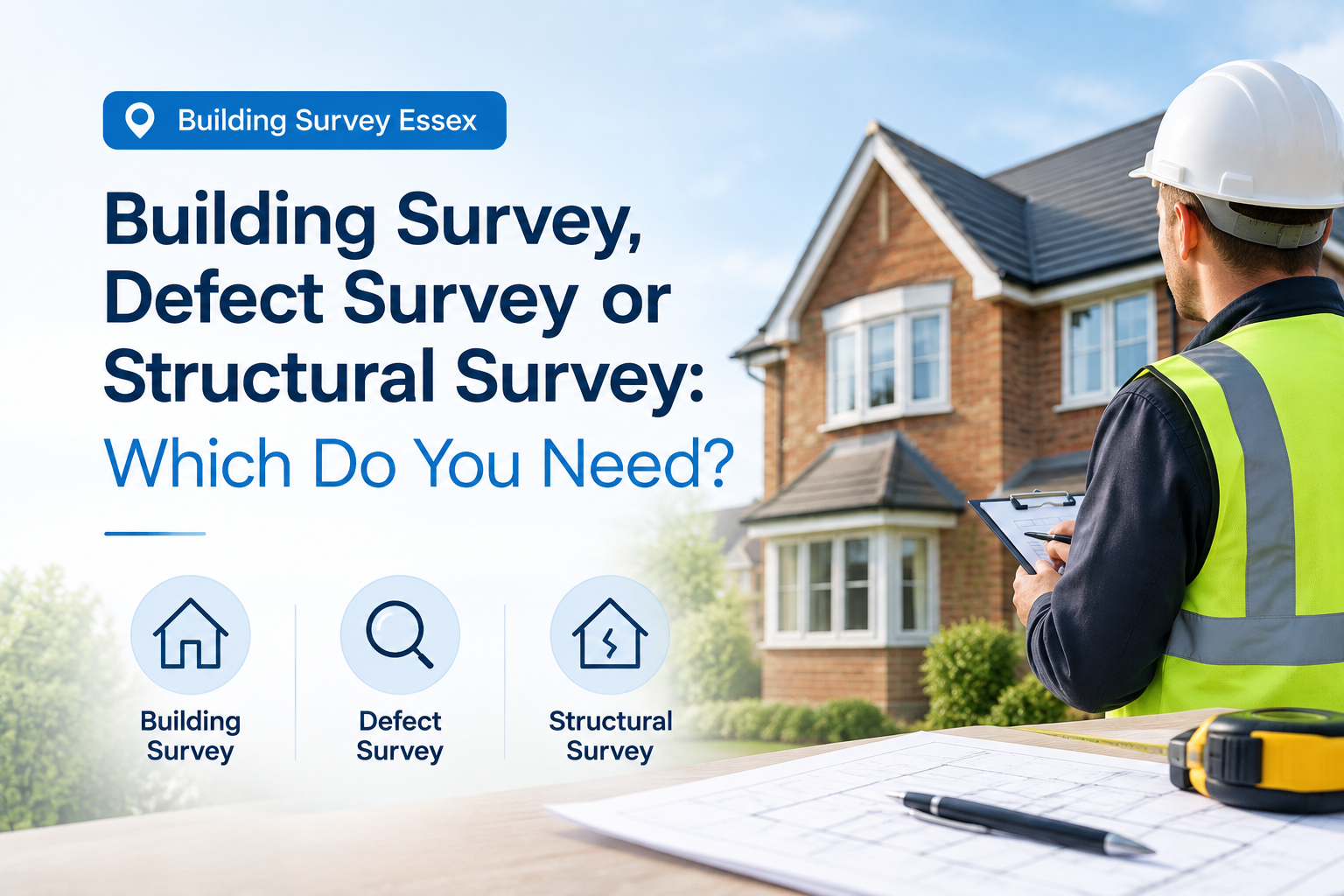
Building Survey, Defect Survey or Structural Survey: Which Do You Need?
If you’ve started researching property surveys, you’ve probably noticed the terminology gets confusing fast. Building survey, structural survey, defect survey, HomeBuyer report, they’re often used loosely, even by people who should know better. Picking the wrong one can mean paying for more than you need, or worse, not getting the depth of inspection your property actually requires.
This guide breaks down what each survey type actually covers, when you need which one, and how to find a qualified surveyor in Essex to carry it out properly.
The Three Main RICS Survey Levels
RICS (Royal Institution of Chartered Surveyors) defines three standard survey levels. Almost everything else, including terms like “structural survey,” falls somewhere within or alongside these.
Level 1: Condition Report A straightforward overview of the property’s condition, best suited to newer homes or conventional properties in good shape. It flags major risks but doesn’t go into much detail or offer repair advice.
Level 2: HomeBuyer Report The most commonly requested survey. Suited to conventional properties built from standard materials, in reasonable condition. It covers structural issues, damp, and any urgent repairs, with a simple condition rating system.
Level 3: Building Survey Often what people mean when they say “structural survey,” even though that’s not the official RICS name. This is the most thorough inspection, recommended for older properties, listed buildings, homes that have been extended, or any property you’re planning renovation work on. It includes a full structural assessment and detailed repair guidance.
So What’s a “Structural Survey,” Exactly?
In everyday use, “structural survey” almost always refers to what RICS calls a Level 3 Building Survey London. If a property has visible cracks, signs of movement, damp problems, or unusual construction, this is the level of detail you need. It goes beyond a general condition check and specifically investigates the building’s structural integrity, foundations, and load-bearing elements.
If someone advertises a “structural survey” as something separate from a Building Survey, ask exactly what it includes before booking, since the term isn’t standardised.
And What About a “Defect Survey”?
A defect survey is usually a narrower, targeted inspection focused on one specific issue, for example, a damp patch, a cracked wall, or a suspected roof leak, rather than a full assessment of the whole property. These are useful when you already know something is wrong and want a specialist opinion on that one issue, but they’re not a substitute for a full survey before purchase.
If you’re buying a property, a full Level 2 or Level 3 survey is almost always the better choice, since it covers the whole building rather than one isolated concern.
How to Decide Which Level You Need
Ask yourself these questions:
- Is the property newer and in good condition? A Condition Report may be enough.
- Is it a standard property in reasonable shape? A HomeBuyer Report is usually the right fit.
- Is it older, listed, extended, or showing signs of damp or movement? Go with a full Building Survey.
- Do you already know about one specific issue and want it investigated further? A targeted defect inspection alongside a broader survey makes sense.
A good surveyor won’t just take your order; they’ll ask about the property’s age, history, and condition before recommending the right level.
Choosing the Right Surveyor for the Job
Whichever survey level you need, the person carrying it out matters just as much as the survey type itself.
Check RICS membership. Look for MRICS, FRICS, or AssocRICS after their name, and verify it for free on the official RICS website. This confirms they meet recognised training standards and carry professional indemnity insurance.
Ask about experience. Find out how long they’ve been practising and whether they’ve worked on properties similar to yours, especially if you need a Level 3 survey on an older or listed building.
Request a sample report. This shows you their level of detail and how clearly they explain findings, rather than relying on vague, generic language.
Look for local Essex knowledge. A surveyor familiar with your area will already understand things like clay soil movement, coastal flood risk, and common issues in local housing stock, all of which are especially relevant for structural assessments.
What Each Survey Level Typically Costs
Prices vary by property size, value, and location, but here’s a general guide:
| Survey Type | Typical Price Range |
| Condition Report (Level 1) | £250–£450 |
| HomeBuyer Report (Level 2) | £400–£800 |
| Building Survey (Level 3) | £600–£1,500+ |
A targeted defect inspection for one specific issue is often cheaper than a full survey, but remember it only covers that one problem, not the property as a whole. Always confirm exactly what’s included before comparing prices between surveyors.
Checklist Before You Hire
- Confirm the exact survey level you’re booking, not just a general term like “structural survey”
- Verify RICS membership on the official register
- Check professional indemnity insurance is in place
- Ask for a sample report at the level you need
- Confirm local experience relevant to your property type
- Get a written quote specifying exactly what’s covered
- Clarify turnaround time for the final report
Common Mistakes to Avoid in Building Survey
Ordering a “structural survey” without confirming what it includes. Since the term isn’t standardised, always ask the surveyor to confirm it matches a Level 3 Building Survey.
Choosing a defect survey when you need a full assessment. A defect survey only looks at what you’ve already flagged; it won’t catch issues you don’t know about yet.
Assuming all survey levels cost roughly the same. Prices differ significantly, and paying for more detail than you need wastes money, while paying for too little can be far more costly later.
Skipping the RICS credential check. Never take a surveyor’s qualifications at face value; verify them yourself.
Ignoring local knowledge. A surveyor unfamiliar with Essex-specific risks, such as clay soil or flood zones, may miss issues a local expert would spot immediately.
Conclusion
The terms “building survey,” “structural survey,” and “defect survey” get used loosely, but understanding what each actually covers helps you book the right inspection the first time. For most buyers, a Level 2 HomeBuyer Report or Level 3 Building Survey will be the right choice, depending on the property’s age and condition. Whichever level you need, choose a RICS-registered surveyor with genuine local Essex experience, and don’t hesitate to ask exactly what’s included before you book.
Frequently Asked Questions
- Is a structural survey more expensive than a HomeBuyer Report? Since “structural survey” usually refers to a Level 3 Building Survey, yes, it’s typically more expensive than a Level 2 HomeBuyer Report, reflecting the greater depth of inspection.
- Can I request a defect survey instead of a full survey to save money? You can, but it only investigates the specific issue you flag. It won’t catch other problems, so it’s not a substitute for a full survey when buying a property.
- Do older properties always need a Level 3 Building Survey? Not always, but it’s strongly recommended for older, listed, or heavily altered properties, since these are more likely to have structural quirks a Level 2 report might miss.
- How do I know if a surveyor’s “structural survey” is actually a Level 3 Building Survey? Ask them directly to confirm which RICS level it corresponds to. A professional surveyor will clarify this without hesitation.
- What happens if I choose the wrong survey level? You might miss important defects if you choose too basic a level, or pay more than necessary if you choose too detailed a survey for a straightforward property. Discussing your property’s condition with the surveyor beforehand helps avoid this.
- Can a defect survey be combined with a full building survey? Yes, if you already know about a specific issue, you can ask your surveyor to give it extra attention within a full Level 2 or Level 3 survey, rather than booking a separate inspection.
- How long does a Level 3 Building Survey take compared to a HomeBuyer Report? A Building Survey generally takes longer on-site, often 3 to 4 hours or more, compared to 1 to 2 hours for a HomeBuyer Report, due to the greater level of detail involved.