



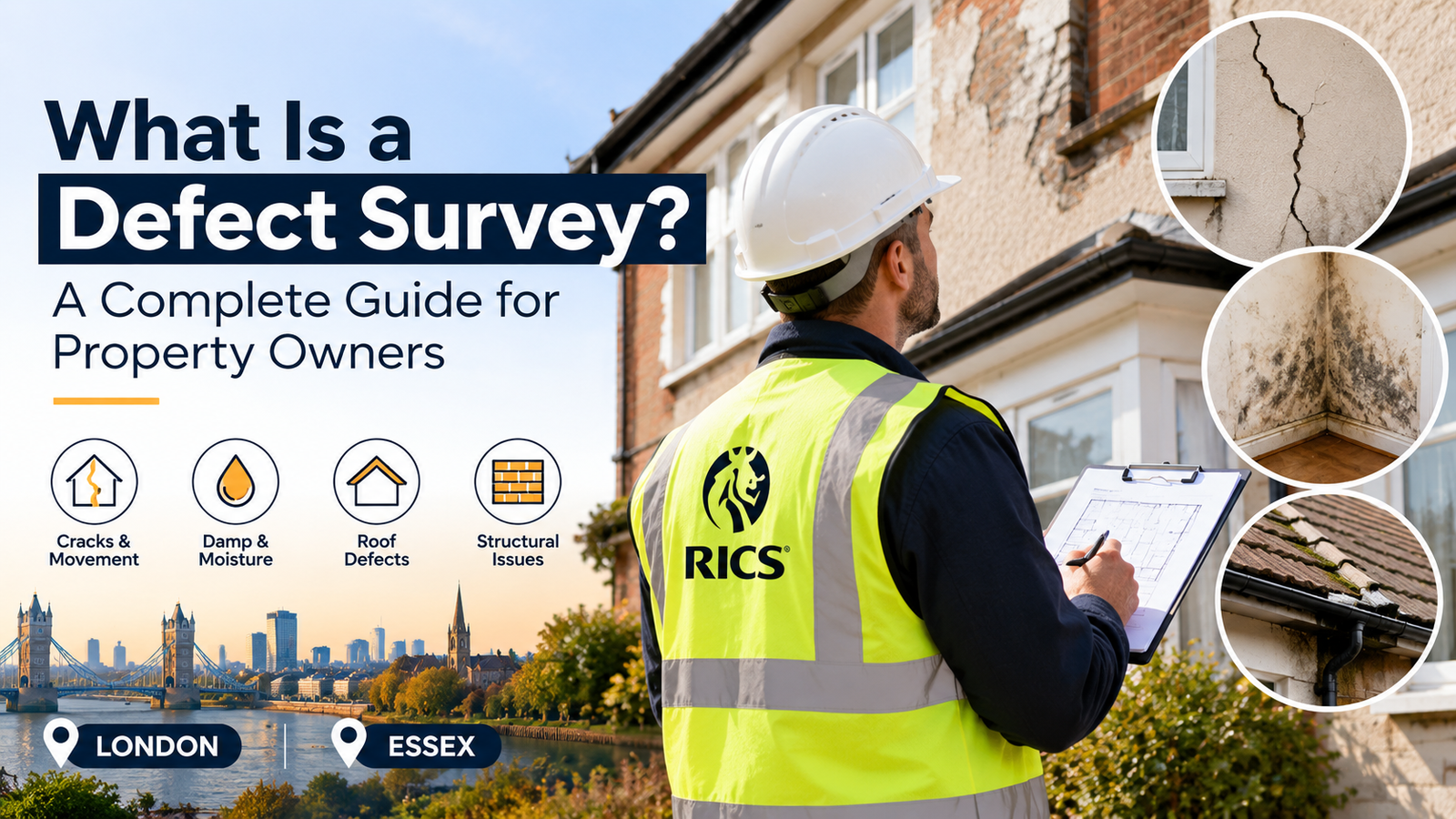
What Is a Defect Survey? A Complete Guide for Property Owners
A crack in a wall, persistent damp, a leaking roof or an uneven floor can be difficult to understand from appearance alone. Some defects may be relatively minor, while others can indicate a deeper problem with the building.
This is where a defect survey can help.
A defect survey is a targeted inspection carried out to investigate a particular building defect or group of related defects. Rather than simply recording that a problem exists, the survey aims to understand what has happened, why it has happened and what may need to be done next.
For property owners, buyers, landlords and other parties dealing with building problems, a professional property defect survey can provide useful technical information before decisions are made about repairs, negotiations or further investigations.
If you are dealing with a known defect in London, you can also explore Structura Surveying’s dedicated Defect Surveys London service.
What Is a Defect Survey?
A defect survey is a focused inspection of a building where a particular defect, damage or concern has been identified.
Unlike a general property inspection, the survey concentrates on the specific issue.
For example, a defect survey may investigate:
- Cracks in walls
- Signs of structural movement
- Persistent damp
- Water ingress
- Roof defects
- Timber decay
- Defective render
- Deteriorating brickwork
- Uneven floors
- Defects caused by alterations or extensions
- Damage following neighbouring construction work
The purpose is to establish as much as reasonably possible about the nature, likely cause and implications of the defect.
The exact scope of an inspection depends on the property, the defect and the surveyor’s terms of engagement.
What Does a Defect Surveyor Look For?
The inspection will depend on the problem being investigated.
A surveyor will normally start by examining the visible evidence and considering how the defect relates to the building as a whole.
For example, a crack should not necessarily be considered in isolation. Its location, pattern, width, surrounding materials, previous repairs and relationship with other parts of the building may all be relevant.
Depending on the defect, the surveyor may consider:
Structural Movement
The surveyor may investigate cracking, distortion, settlement or other signs that could indicate movement within the building.
Where a wider structural concern is suspected, a detailed building survey may also be appropriate. Structura Surveying provides Building Surveys London and Building Surveys Essex for properties requiring a broader assessment.
Damp and Moisture
Where damp is present, the investigation may consider potential sources such as:
- Penetrating moisture
- Leaking rainwater goods
- Roof defects
- Plumbing leaks
- Groundwater
- Condensation
- Defective external details
Identifying the source is important because treating the visible symptom without addressing the underlying cause may not resolve the problem.
Roof Defects
A roof defect survey may consider visible roof coverings, flashings, chimneys, gutters and accessible roof spaces.
Where safe and reasonably accessible, the surveyor may investigate signs of water penetration, deterioration or other defects.
External Walls
The inspection may look at:
- Cracked brickwork
- Failed pointing
- Defective render
- Bulging walls
- Deterioration
- Previous repair work
- Signs of movement
Floors and Ceilings
Uneven floors, cracking, staining or movement may require further investigation to understand whether the issue is cosmetic, related to moisture or potentially associated with another building defect.
What Is the Difference Between a Defect Survey and a Building Survey?
This is an important distinction.
A building survey is generally concerned with assessing the wider condition of a property, depending on the level of service provided.
A defect survey, on the other hand, is more focused.
For example, someone purchasing a property may commission a building survey covering the overall condition of the building.
If that survey identifies significant cracking, damp or another specific concern, a separate defect survey may then be commissioned to investigate that issue in greater detail.
This means the two services can complement each other rather than necessarily being alternatives.
If you are unsure whether you need a general building survey or a targeted defect investigation, you can review the different building surveying services offered by Structura Surveying.
When Do You Need a Defect Survey?
There are several situations where a defect survey may be appropriate.
1. You Have Found Cracks in the Property
Not every crack means there is a serious structural problem.
However, cracks that are unusual, recurring, widening or associated with other signs of movement may justify further investigation.
A defect survey can help determine whether the observed cracking requires monitoring, repair or specialist investigation.
2. Damp Keeps Coming Back
If damp has returned after previous treatment, simply applying another surface treatment may not address the underlying issue.
A surveyor can investigate the building and consider potential sources of moisture.
3. You Are Buying a Property With a Known Defect
A property may appear attractive to a buyer while having a particular defect identified during the purchasing process.
A targeted property defect survey can provide additional technical information before the buyer decides how to proceed.
This can be particularly relevant where the issue could involve substantial future repair costs.
For buyers in Essex, Structura’s dedicated Defect Surveys in Essex service covers targeted investigations of building defects and related property concerns.
4. Previous Repairs Have Failed
If a defect has already been repaired but has returned, the important question may be why the repair failed.
A defect inspection can investigate the visible evidence and consider whether the previous repair appears appropriate or whether another underlying cause may be involved.
5. Building Work Has Affected Your Property
Neighbouring construction, extensions, excavation or other works can sometimes lead to concerns about damage or movement.
Where there is a dispute about the condition of a property, a detailed survey report can provide useful technical evidence.
Where the issue involves a legal or neighbour dispute, an appropriate boundary dispute surveying service may also be relevant.
Common Property Defects That May Require Investigation
Property defects can take many forms.
Some of the most common include:
| Defect | What May Need Investigation |
|---|---|
| Wall cracks | Pattern, location, movement and possible causes |
| Damp | Source of moisture and affected materials |
| Water ingress | Roof, walls, windows, flashings or drainage |
| Roof damage | Coverings, structure and water penetration |
| Timber decay | Moisture source and extent of deterioration |
| Uneven floors | Possible movement, settlement or construction issues |
| Defective pointing | Weathering, water penetration and masonry condition |
| Render cracking | Movement, moisture or defective application |
| Ceiling staining | Possible leaks or moisture |
| Structural movement | Cracking, distortion and other evidence |
The presence of one of these symptoms does not automatically establish a particular cause.
That is why professional inspection is important.
What Happens During a Defect Inspection?
A defect inspection normally starts with a review of the information available about the problem.
This may include:
- Previous survey reports
- Photographs
- Repair records
- Information from the owner
- Details of when the problem first appeared
- Previous contractor recommendations
- Information about alterations or extensions
The surveyor then carries out a physical inspection appropriate to the instruction.
During the inspection, they may:
- Examine the affected area.
- Look for related defects elsewhere.
- Consider possible causes.
- Assess the extent of visible damage.
- Photograph relevant findings.
- Identify limitations to the inspection.
- Recommend further investigation where necessary.
The inspection should be proportionate to the defect being investigated.
Does a Defect Survey Identify the Cause of a Problem?
It can help identify the likely cause, but it is important not to assume that every defect can be diagnosed conclusively from a single visual inspection.
Some problems require:
- Further monitoring
- Specialist testing
- Opening-up
- Drainage investigation
- Structural engineering assessment
- Specialist damp investigation
- Laboratory analysis
- Other targeted investigations
A professional surveyor should make clear where further investigation is required rather than presenting an uncertain conclusion as fact.
This is particularly important with structural movement and moisture-related defects.
What Is Included in a Defect Survey Report?
The exact report format varies between surveyors and instructions, but a professional report may include:
Description of the Defect
What has been observed and where it occurs.
Photographic Evidence
Images showing the relevant areas and defects.
Assessment
An explanation of the condition and significance of the observed problem.
Likely Cause
Where reasonably possible, an assessment of the probable cause based on the available evidence.
Recommendations
Potential next steps, further investigations or repair considerations.
Limitations
Any areas that could not be inspected or information that could not be confirmed.
A clear report should help the client understand what is known, what is uncertain and what should happen next.
Defect Surveys in London and Essex
The type of building defect can vary considerably depending on the property and its location.
A defect surveyor working across London and Essex may encounter a wide range of property types, construction methods, ages and alterations.
In London, defects can arise in older properties, converted buildings, extensions, flats and properties affected by neighbouring development.
For property owners specifically looking for a targeted investigation in the capital, Structura Surveying provides professional Defect Surveys in London.
In Essex, surveyors may encounter a mixture of older housing, modern developments, rural properties and buildings affected by different ground and environmental conditions.
If your property is in Essex and a specific defect has already been identified, you can learn more about Defect Surveys in Essex.
However, location alone does not establish the cause of a defect.
The individual building must be inspected and the available evidence considered.
How Much Does a Defect Survey Cost?
There is no single price for a defect survey.
The cost depends on factors such as:
- Type of defect
- Size of the property
- Complexity of the problem
- Location of the affected area
- Accessibility
- Amount of investigation required
- Reporting requirements
- Whether further specialist investigation is needed
A simple inspection of a clearly defined defect may require less time than a complex investigation involving multiple areas of a building.
When requesting a quotation, explain the problem as clearly as possible and provide photographs or previous reports if available.
This allows the surveyor to understand the scope of the instruction before providing a quotation.
What Should You Do If a Survey Finds a Defect?
Don’t immediately assume that the property is unsuitable or that the repair will be extremely expensive.
Instead, establish exactly what the report says.
You may need to:
- Understand the defect.
- Establish its likely cause.
- Determine whether further investigation is required.
- Obtain specialist advice where appropriate.
- Obtain repair estimates.
- Consider the potential long-term implications.
- Discuss the findings with the relevant parties.
For a property purchase, the information can help you make a more informed decision.
For an existing property, it can help you decide what action may be required.
Can a Defect Survey Help With a Property Dispute?
In some situations, a defect may become part of a wider disagreement between property owners, neighbours, contractors, insurers or other parties.
For example, a dispute could involve:
- Damage allegedly caused by neighbouring works
- Responsibility for building repairs
- Water ingress
- Boundary-related damage
- Defective construction
- Poor workmanship
- Responsibility for remedial works
In these situations, independent technical evidence can be important.
Where a matter requires a formal technical report for a legal dispute, Structura Surveying also provides Expert Witness Reports in Essex.
The appropriate service will depend on the circumstances and the purpose of the report.
Choosing a Defect Surveyor
When looking for a defect surveyor, don’t choose solely on price.
Consider:
Relevant Qualifications
Check the surveyor’s professional credentials and whether they are appropriately qualified for the work.
Experience
Ask whether they regularly investigate the type of defect affecting your property.
Local Knowledge
If your property is in London or Essex, relevant experience in the local property market can be useful.
Reporting
Ask what the final report will include and whether photographic evidence is provided.
Scope
Make sure you understand exactly what the surveyor has been instructed to investigate.
Defect Survey vs Defect Inspection: Are They the Same?
The terms defect survey and defect inspection are sometimes used interchangeably, but the exact service depends on the surveyor’s scope of work.
An inspection describes the physical assessment carried out at the property.
A defect survey generally refers to the wider professional service, which can include the inspection, assessment and written reporting.
When appointing a surveyor, focus less on the terminology and more on what the instruction actually includes.
Frequently Asked Questions About Defect Surveys
What is a defect survey?
A defect survey is a targeted property inspection carried out to investigate a specific defect or group of related defects. It aims to assess the condition, investigate possible causes and provide recommendations based on the available evidence.
What is a property defect survey?
A property defect survey focuses on a specific problem affecting a building, such as cracking, damp, water ingress, roof damage or deterioration.
Is a defect survey the same as a building survey?
No. A building survey assesses the wider condition of a property, while a defect survey focuses on a particular building problem.
If you need a full assessment rather than a targeted defect investigation, you may want to consider Structura’s Building Surveys service.
Do I need a defect survey if I already have a home survey?
Not necessarily. However, if your home survey identifies a significant or uncertain defect, a separate targeted investigation may be appropriate.
Can a defect survey identify structural problems?
A surveyor can identify visible signs that may indicate structural movement or other building problems. However, some cases require further specialist investigation before the cause can be confirmed.
Can I use a defect survey during a property purchase?
Yes. A targeted defect survey may be useful when a specific concern has been identified during the purchase process and additional information is needed before making a decision.
Can a defect survey help with a property dispute?
It can provide technical information about an observed defect, its likely cause and condition. Where a dispute is involved, the appropriate scope and reporting requirements should be discussed with the surveyor before instruction.
If the disagreement specifically concerns the position or ownership of a boundary, a dedicated Boundary Dispute Survey in Essex or Boundary Dispute Surveyor in London may be more appropriate.
Should I get a defect survey for cracks?
It depends on the nature of the cracks and the circumstances. Minor cosmetic cracking may not require a specialist survey, while recurring, widening or unusual cracking may justify further professional assessment.