



What Is a Structural Defect Survey? Signs, Causes and When You Need One
Structural problems in a property are not always obvious.
A crack running across a wall, uneven floors, doors that suddenly stop closing properly or visible movement in a building can all raise questions about whether there is an underlying structural defect.
However, not every crack or building defect means that a property has a serious structural problem.
This is where a structural defect survey can help.
A structural defect survey is a targeted inspection designed to investigate a suspected structural problem, assess the available evidence and help establish the likely cause and significance of the defect.
For property owners, buyers, landlords and other property professionals, a professional structural defect inspection can provide useful information before decisions are made about repairs, further investigations or other action.
If a specific defect has already been identified, Structura Surveying provides Defect Surveys in London and Defect Surveys in Essex.
What Is a Structural Defect?
A structural defect is a problem that may affect an important load-bearing or structural element of a building.
Depending on the property, this could involve:
- Foundations
- Load-bearing walls
- Structural floors
- Roof structure
- Beams
- Lintels
- Structural openings
- Masonry
- Structural timber
- Connections between building elements
A defect may develop because of age, movement, moisture, poor construction, inappropriate alterations, deterioration or other factors.
Importantly, the appearance of a defect does not automatically establish its cause.
For example, a crack could be related to:
- Normal movement
- Thermal movement
- Shrinkage
- Settlement
- Ground movement
- Structural movement
- Moisture
- Poor workmanship
- Previous alterations
This is why professional assessment is valuable when a defect appears unusual, persistent or progressive.
What Are the Common Signs of Structural Problems?
There are several warning signs that may justify further investigation.
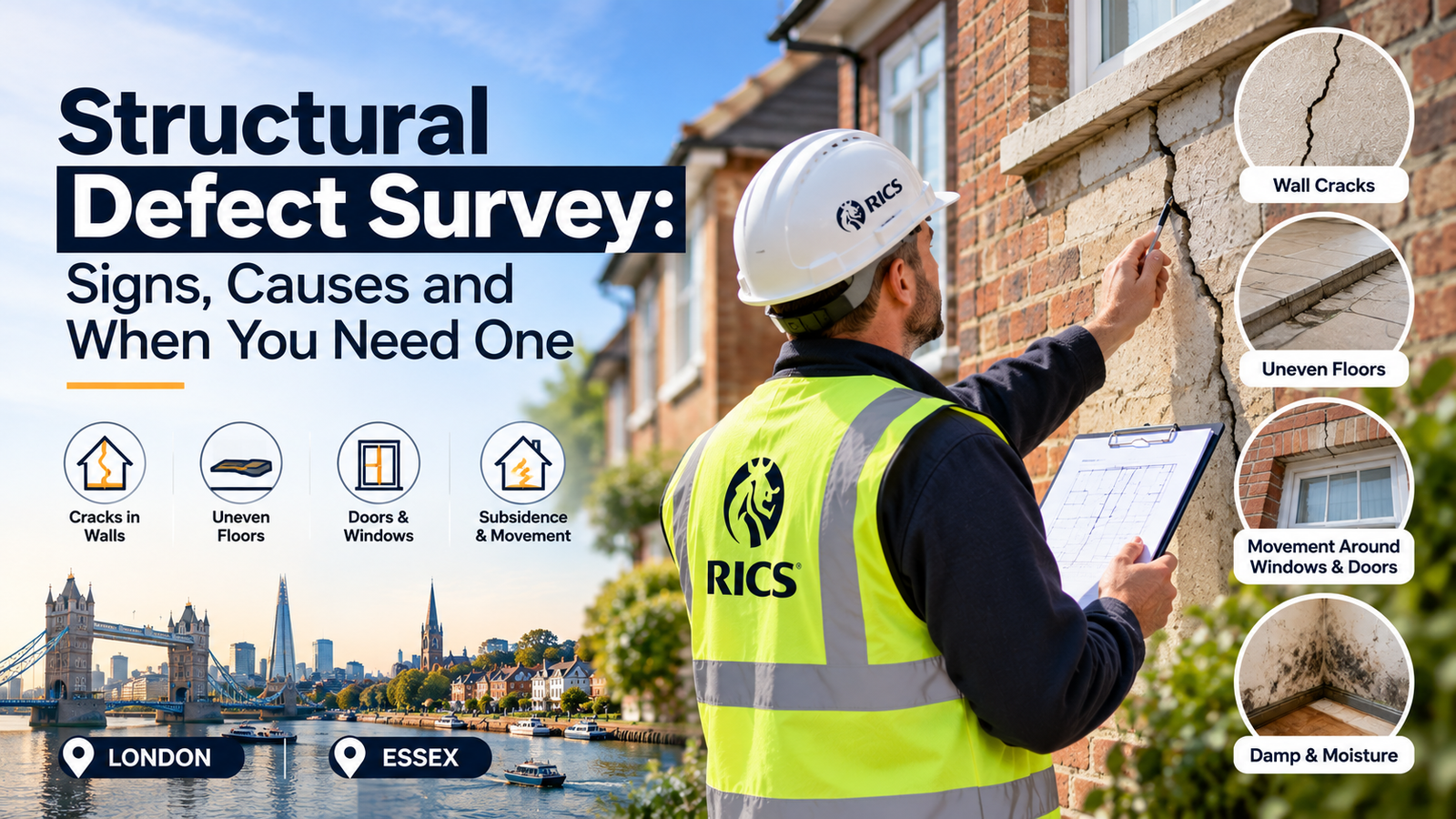
1. Cracks in Walls
Cracking is one of the most common reasons property owners seek professional advice.
However, cracks vary considerably.
A surveyor may consider:
- Location
- Direction
- Width
- Pattern
- Depth
- Whether the crack is recurring
- Whether it has changed over time
- Whether nearby areas show similar movement
A diagonal crack around a window or door, for example, may require a different assessment from minor hairline cracking in plaster.
The important point is that the crack itself is evidence of a condition, not necessarily a diagnosis.
2. Uneven or Sloping Floors
Floors that appear uneven or have developed noticeable changes may sometimes indicate movement within the building.
Potential causes can include:
- Settlement
- Structural movement
- Timber deterioration
- Altered floor structures
- Ground-related movement
- Moisture damage
A surveyor will consider the floor in context with the rest of the property rather than assuming a single cause.
3. Doors and Windows Becoming Difficult to Open
Doors or windows that suddenly become difficult to operate may sometimes be associated with movement or distortion.
However, there are many other possible explanations, including:
- Timber expansion
- Moisture
- Age
- Poor installation
- Frame deterioration
- Seasonal movement
If the problem occurs alongside significant cracking or other changes to the building, further investigation may be appropriate.
4. Gaps Around Windows or Doors
Changes around openings can sometimes indicate movement in surrounding masonry or structural elements.
A surveyor may inspect:
- Window heads
- Lintels
- Surrounding brickwork
- Cracks
- Movement
- Previous repairs
This can help establish whether the issue appears localised or forms part of a wider defect.
5. Bulging or Distorted Walls
A wall that appears to bulge, lean or distort may require professional inspection.
Potential causes can include:
- Structural movement
- Moisture
- Deterioration
- Poor construction
- Failed wall ties
- Inadequate support
- Alterations
The urgency of the issue depends on the actual condition and evidence found during inspection.
What Causes Structural Defects in Buildings?
Structural defects can develop for many different reasons.
Ground Movement
Changes in ground conditions can affect buildings, particularly where foundations are shallow or the underlying ground is susceptible to movement.
In parts of Essex and London, ground conditions can be an important factor when investigating cracking or movement.
Structura’s Essex building survey service specifically highlights clay-heavy ground conditions and the importance of considering ground movement when assessing properties. (Structura Surveying)
Subsidence
Subsidence occurs when the ground beneath part of a building moves or reduces in volume, potentially causing the building above to move.
Possible contributing factors can include:
- Shrinkable clay
- Vegetation and tree roots
- Leaking drains
- Changes in groundwater
- Ground disturbance
However, visible cracking alone does not prove that a property is suffering from subsidence.
A professional assessment is required to understand the evidence.
Poor Construction
Defects may sometimes originate from the original construction of a building.
Examples include:
- Inadequate structural support
- Poor detailing
- Incorrect materials
- Poor workmanship
- Inadequate drainage
- Defective connections
Older properties can also contain construction methods that require specialist knowledge to understand.
Structural Defects Caused by Alterations and Extensions
Property alterations can introduce new structural issues when they have not been properly designed or constructed.
Common examples include:
- Loft conversions
- Rear extensions
- Side extensions
- Removed internal walls
- Enlarged openings
- Basement works
- Roof alterations
Removing a load-bearing wall, for example, may require appropriate structural support.
If an alteration has been poorly designed or constructed, cracking, movement or distortion may appear later.
For buyers considering an altered property, a broader Building Survey can provide an overall assessment, while a targeted defect survey may be appropriate where a particular structural concern has already been identified.
Can Damp Cause Structural Problems?
Moisture can contribute to building deterioration and, in some circumstances, structural problems.
Persistent moisture can affect:
- Timber
- Masonry
- Mortar
- Roof structures
- Floors
- Plaster
- Other building materials
For example, prolonged moisture exposure can contribute to timber decay.
This is why a damp problem should not always be treated as a purely cosmetic issue.
The source of moisture should be investigated before deciding on remedial work.
What Is the Difference Between a Structural Defect Survey and a Building Survey?
This distinction is important.
A building survey considers the wider condition of a property.
A structural defect survey focuses on a particular structural concern.
For example, if you are buying a property and want to understand its overall condition, a building survey may be appropriate.
If an existing survey has identified significant cracking and you need to understand the cause of that specific issue, a targeted structural defect survey may be more suitable.
Structura Surveying’s building survey service includes defect analysis for issues such as structural movement, timber decay, damp, roofing defects, poor construction and subsidence. Structura Surveying
When Should You Arrange a Structural Defect Survey?
A structural defect survey may be appropriate when:
You Have New or Worsening Cracks
Particularly where cracks appear to be changing or are accompanied by other signs of movement.
You Suspect Subsidence
If there are concerns about ground movement, professional assessment can help establish what evidence exists.
A Previous Survey Identified Structural Concerns
A general property survey may identify an issue that requires more focused investigation.
You Are Buying a Property With Visible Defects
Additional technical information may be useful before committing to the purchase.
An Extension or Loft Conversion Shows Signs of Movement
Alterations should be considered in the context of the property’s original structure.
Previous Repairs Have Failed
Recurring defects may indicate that the original cause has not been addressed.
You Have an Insurance Claim
Where structural damage is associated with an insured event, an independent technical assessment may help establish the nature and extent of the damage.
Structura also provides Insurance Claims Project Management, including technical surveying, damage assessment and reinstatement management
What Happens During a Structural Defect Inspection?
The exact inspection depends on the problem.
A surveyor will normally begin by understanding:
- What has happened
- When the issue was first noticed
- Whether it has changed
- Previous repair work
- Previous survey findings
- Relevant alterations
- Any available photographs or documentation
The physical inspection may then include:
- Examining the affected area.
- Inspecting surrounding building elements.
- Looking for related defects.
- Recording measurements and photographs.
- Considering possible causes.
- Assessing the apparent extent of the problem.
- Identifying whether further investigation is required.
The surveyor may also use appropriate diagnostic equipment where necessary.
What Does a Structural Defect Survey Report Include?
The final report will depend on the scope of the instruction, but it may include:
Description of the Defect
A clear explanation of what was observed.
Photographic Evidence
Images showing relevant defects and surrounding areas.
Assessment
An explanation of the apparent condition and significance of the findings.
Likely Cause
Where the available evidence allows, an assessment of the probable cause.
Recommendations
Advice on further investigation, monitoring or potential remedial action.
Limitations
Details of anything that could not be inspected or confirmed.
A good report should clearly distinguish between observed facts, professional interpretation and areas where further evidence is required.
Can a Structural Defect Survey Confirm Subsidence?
Not always.
Subsidence can be complex, and cracking alone is not enough to establish that subsidence is occurring.
Other factors may need to be considered, including:
- Ground conditions
- Tree roots
- Drainage
- Crack patterns
- Building movement
- Previous history
- Changes over time
In some cases, monitoring or additional specialist investigation may be recommended.
This is why it is important to avoid assuming that every crack represents subsidence.
Structural Defect Surveys in London
London contains a highly varied mix of properties, from older terraces and period homes to flats, conversions and modern developments.
This means structural defects can have many different causes.
Potential concerns may include:
- Structural cracking
- Subsidence
- Movement
- Defective alterations
- Damp-related deterioration
- Roof defects
- Timber problems
- Defective masonry
Structura Surveying provides Structural Defect Surveys in London as part of its targeted defect surveying services.
Its London service covers investigations where property owners, buyers, landlords, insurers or other parties need a professional assessment of a known or suspected defect.
Structural Defect Surveys in Essex
Essex properties can also experience a wide range of building defects.
Ground conditions are particularly relevant when assessing movement and cracking in some parts of the county.
Other common concerns may include:
- Structural cracking
- Damp
- Roof deterioration
- Poor alterations
- Timber defects
- Drainage-related problems
- Movement
- Subsidence concerns
Structura Surveying provides Structural Defect Surveys in Essex, with its Essex service covering locations including Chelmsford, Brentwood, Basildon, Colchester, Southend-on-Sea
What If the Defect Is Related to a Neighbouring Property?
Sometimes structural or building damage is associated with work carried out on a neighbouring property.
Examples might include:
- Excavation
- Extensions
- Basement construction
- Building alterations
- Demolition
- Boundary works
In these situations, establishing the condition of the property and documenting the observed damage can be important.
Where the matter develops into a boundary or neighbour dispute, Structura also provides Boundary Dispute Surveying services.
The appropriate service will depend on the nature of the dispute and the technical evidence required.
What Should You Do After a Structural Defect Is Identified?
Finding a structural defect does not automatically mean that a property is unsafe or that major works are required.
The next step should be to understand the problem.
Depending on the findings, you may need to:
- Review the survey report.
- Establish the likely cause.
- Determine whether further investigation is required.
- Obtain specialist advice.
- Obtain repair recommendations.
- Request quotations where appropriate.
- Consider monitoring if recommended.
For property buyers, the findings may also form part of wider discussions with the seller or other professionals involved in the transaction.
How Much Does a Structural Defect Survey Cost?
There is no standard price for every structural defect survey.
The cost can depend on:
- Property size
- Type of defect
- Complexity
- Accessibility
- Number of affected areas
- Required investigation
- Reporting requirements
- Location
A focused inspection of a single visible defect may be considerably different from a complex investigation involving multiple areas of a building.
The best approach is to provide the surveyor with as much information as possible before requesting a quotation.
How to Choose a Structural Defect Surveyor
Before appointing a surveyor, consider:
Professional Qualifications
Check relevant professional membership and qualifications.
Relevant Experience
Ask whether the surveyor has investigated similar defects before.
Local Experience
For properties in London or Essex, experience with local building types and conditions can be useful.
Clear Scope
Make sure you understand exactly what the surveyor has been instructed to investigate.
Reporting
Ask what the final report includes and whether photographs and recommendations are provided.
Follow-Up Support
Find out whether the surveyor can explain the findings after the report has been issued.
Frequently Asked Questions
What is a structural defect survey?
A structural defect survey is a targeted inspection of a suspected structural problem within a building. It investigates the visible evidence, considers possible causes and provides professional findings and recommendations based on the agreed scope.
What are common structural defects in houses?
Common concerns include cracking, movement, settlement, subsidence, defective structural alterations, timber deterioration and problems affecting load-bearing elements.
Does every crack mean a structural problem?
No. Cracks can occur for many reasons, including shrinkage, thermal movement, settlement, moisture and normal building movement. The pattern and context need to be considered before determining their significance.
Is a structural defect survey the same as a structural engineer’s report?
Not necessarily. A building surveyor and structural engineer can have different areas of expertise and scopes of instruction. If specialist structural calculations or engineering design are required, a surveyor may recommend involving a structural engineer.
Should I get a structural defect survey before buying a property?
If a specific structural concern has already been identified, a targeted survey may provide useful additional information before you commit to the purchase. For an overall assessment of the property, a suitable RICS Home Survey or building survey may be more appropriate.
Can a structural defect survey help with an insurance claim?
Yes. A professional defect report can provide technical information about the condition, cause and extent of a defect where this falls within the agreed scope. Structura also provides insurance claims project management for more complex property damage and reinstatement work.
Can a structural defect survey be used in a property dispute?
Potentially. A properly scoped technical report can provide evidence about observed defects and their likely causes. If the report is specifically required for formal legal proceedings, this should be explained to the surveyor before instruction.
How long does a structural defect survey take?
The inspection time depends on the property and complexity of the defect. A focused inspection may be relatively short, while complex or multiple defects can require considerably more time.