



Owning a home comes with a lot of pride, but it can also come with a few headaches. One of the most common and stressful issues homeowners face is Boundary Disputes in Essex. Whether it’s a disagreement over a garden fence, a shifted hedge line, or confusion about where one property ends and another begins, these disputes can quickly create tension between neighbours.
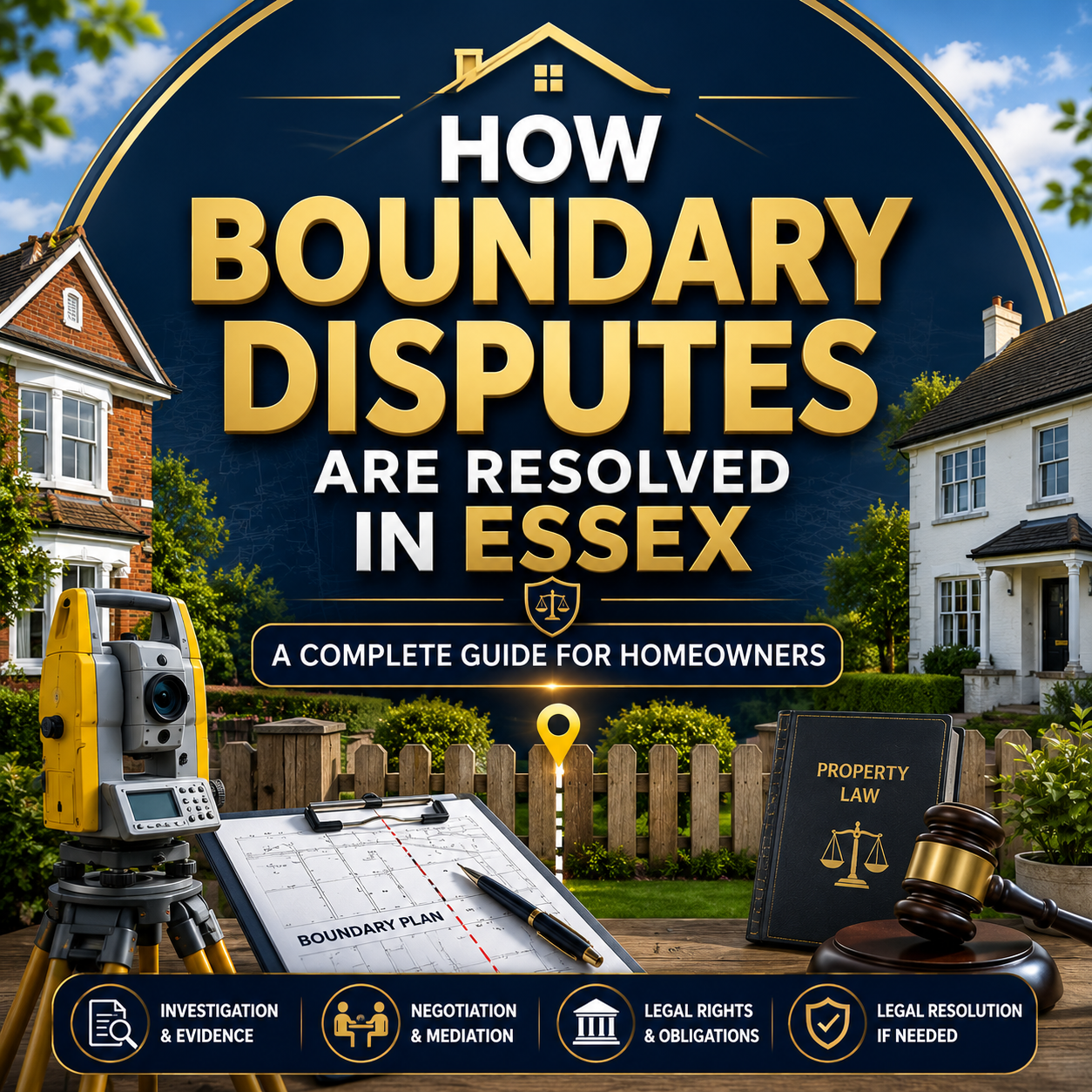
The good news is that most Boundary Disputes in Essex can be resolved calmly and fairly without long-term stress or expensive legal action. In this guide, we’ll explain why boundary disputes happen, how surveyors help resolve them, the legal options available, and practical steps homeowners can take to avoid conflicts in the first place.
What Is a Boundary Dispute?
A boundary dispute happens when two neighbouring property owners disagree about where the legal line between their properties actually sits. This might involve a fence, wall, hedge, driveway, or even a small strip of land that both parties believe belongs to them.
In Essex, with its mix of older villages, new housing developments, and rural properties, boundary disputes are fairly common. Older properties often have boundaries that were never precisely recorded, while newer developments can run into confusion caused by incomplete or unclear plans.
Common Causes of Boundary Disputes
Understanding why these disputes happen is the first step toward avoiding or resolving them. Some of the most frequent causes include:
1. Unclear or Outdated Property Deeds
Older title deeds often describe boundaries in vague terms, sometimes using landmarks that no longer exist. This makes it hard to pinpoint an exact boundary line today.
2. Fences, Walls, or Hedges Moved Over Time
Fences rot, hedges grow, and walls get rebuilt. Over the years, these features can shift slightly from their original position, leading one neighbour to believe the boundary has moved.
3. New Extensions or Building Work
When a neighbour builds an extension, garage, or new fence, it can encroach onto what the other party believes is their land, sparking a dispute.
4. Inherited or Newly Purchased Property
New owners may not be aware of informal agreements previous owners had with neighbours, leading to confusion when those old understandings are no longer honoured.
5. Inaccurate Land Registry Plans
Land Registry title plans are based on general boundaries, not exact measurements. This means the plan shows roughly where a boundary is, not the precise legal line, which can lead to disagreements.
How Surveyors Help Resolve Boundary Disputes
When neighbor’s can’t agree on where a boundary lies, a chartered land surveyor is often the best person to bring clarity to the situation.
Here’s how surveyors typically help:
- Reviewing historical documents – Surveyors examine title deeds, old maps, and Land Registry records to trace the boundary’s history.
- Conducting a physical site survey – Using precise measuring equipment, surveyors measure the land and compare it against historical plans and evidence.
- Identifying boundary features – They look for physical evidence such as old fence posts, wall foundations, or hedge lines that indicate where the boundary has historically been.
- Producing an independent report – A surveyor’s report is impartial and based on evidence, which can be extremely useful if the dispute needs to go further, such as to mediation or court.
Many boundary disputes in Essex are resolved simply because a professional surveyor’s report gives both parties clear, factual evidence to work from, removing the guesswork and emotion from the conversation.
Legal Solutions for Boundary Disputes
If a friendly conversation and a surveyor’s report aren’t enough to settle things, there are several legal routes available.
1. Mediation
Mediation involves a neutral third party helping both sides reach an agreement. It’s usually quicker, cheaper, and far less stressful than going to court, and it helps preserve the neighbourly relationship.
2. Boundary Agreements
Once both parties agree on where the boundary lies, they can formalise this with a written boundary agreement. This can be registered with the Land Registry so the matter is settled permanently and clearly for future owners too.
3. Determined Boundary Application
Property owners can apply to the Land Registry to have an exact boundary line legally determined and recorded. This is a more formal and precise process than the general boundaries usually shown on title plans.
4. Solicitor Involvement
A solicitor experienced in property law can review the evidence, advise on your legal position, and negotiate with the other party or their solicitor on your behalf.
5. Court Action
As a last resort, boundary disputes can be taken to court. This is usually the most expensive and time-consuming option, so it’s generally recommended only when other methods have failed.
Tips to Avoid Boundary Disputes
Prevention is always better than a lengthy dispute. Here are some practical tips for Essex homeowners:
- Check your deeds early – Review your title deeds and Land Registry plan when you first move in, so you understand your boundaries from day one.
- Talk to your neighbors – Open, friendly communication before any building work or fence replacement can prevent misunderstandings later.
- Keep records – Take photos of boundary features like fences and hedges, and keep any written agreements safe.
- Get a survey before building work – If you’re planning an extension or new structure near a boundary, a pre-construction survey can save a lot of trouble.
- Address issues early – Don’t let small disagreements simmer. Addressing concerns quickly, calmly, and directly usually leads to a faster resolution.
- Consider a boundary agreement – If there’s ever any doubt, formalizing an agreement in writing protects both parties for the future.
Frequently Asked Questions (FAQs)
- How do I find out where my exact property boundary is in Essex?
Start by checking your title deeds and Land Registry plan. For a precise answer, hire a chartered land surveyor who can measure the site and compare it with historical records. - Can I resolve a boundary dispute without going to court?
Yes, most boundary disputes are resolved through friendly discussion, a surveyor’s report, mediation, or a formal boundary agreement, without ever needing court involvement. - What should I do if my neighbor built a fence on my land?
First, gather evidence such as your title deeds and any old photos. Then raise the issue calmly with your neighbor. If needed, bring in a surveyor to confirm the boundary before considering legal advice. - How much does a boundary dispute surveyor cost in Essex?
Costs vary depending on the size and complexity of the property, but a boundary survey is generally far cheaper than legal fees from a court dispute, making it a worthwhile early investment. - Does the Land Registry show the exact boundary line?
Not usually. Land Registry title plans show general boundaries, meaning the exact line can vary slightly. A determined boundary application is needed for a precise legal boundary. - How long does it take to resolve a boundary dispute?
It depends on the method used. Friendly agreements can be settled in weeks, mediation may take a few months, while court cases can take a year or longer. - Can a boundary agreement be added to my property’s official records?
Yes, once both neighbor’s agree on a boundary line, the agreement can be registered with the Land Registry, making it a permanent part of the property’s legal record for future owners.