


Skip to content
  • RICS
  • Partner Logo
  • Partner Logo
  • Partner Logo
Structura SurveyingStructura SurveyingStructura Surveying
01277 549 086 tel:+1(212) 255-511
  • Home
  • About Us
  • Services
    • Drone Surveys
    • RICS Home Surveys
      • RICS Home Surveys London
      • RICS Home Surveys Essex
    • Building Surveys
      • Building Surveys Essex
      • Building Surveys London
    • Snagging Surveys
    • Party Wall Surveys
    • Boundary Disputes
      • Boundary Dispute Surveyor Essex
      • Boundary Dispute Surveyor London
    • Specialist & Defect Services
    • Property Valuations
    • Insurance Claims Project Management
      • Insurance Claims Project Management London
      • Insurance Claims Project Management in Essex
    • Environmental Reports
      • Environmental Reports London
      • Environmental Reports Essex
    • Defect Surveys
      • Defect Surveys Essex
      • Defect Surveys London
    • Expert Witness Report
      • Expert Witness Report Essex
      • Expert Witness Report London
    • Party Wall Disputes
      • Party Wall Disputes Essex
      • Party Wall Disputes London
  • Contact Us
  • Blog
Get a Quote

Category: All

Structura Surveying > Blogs > All
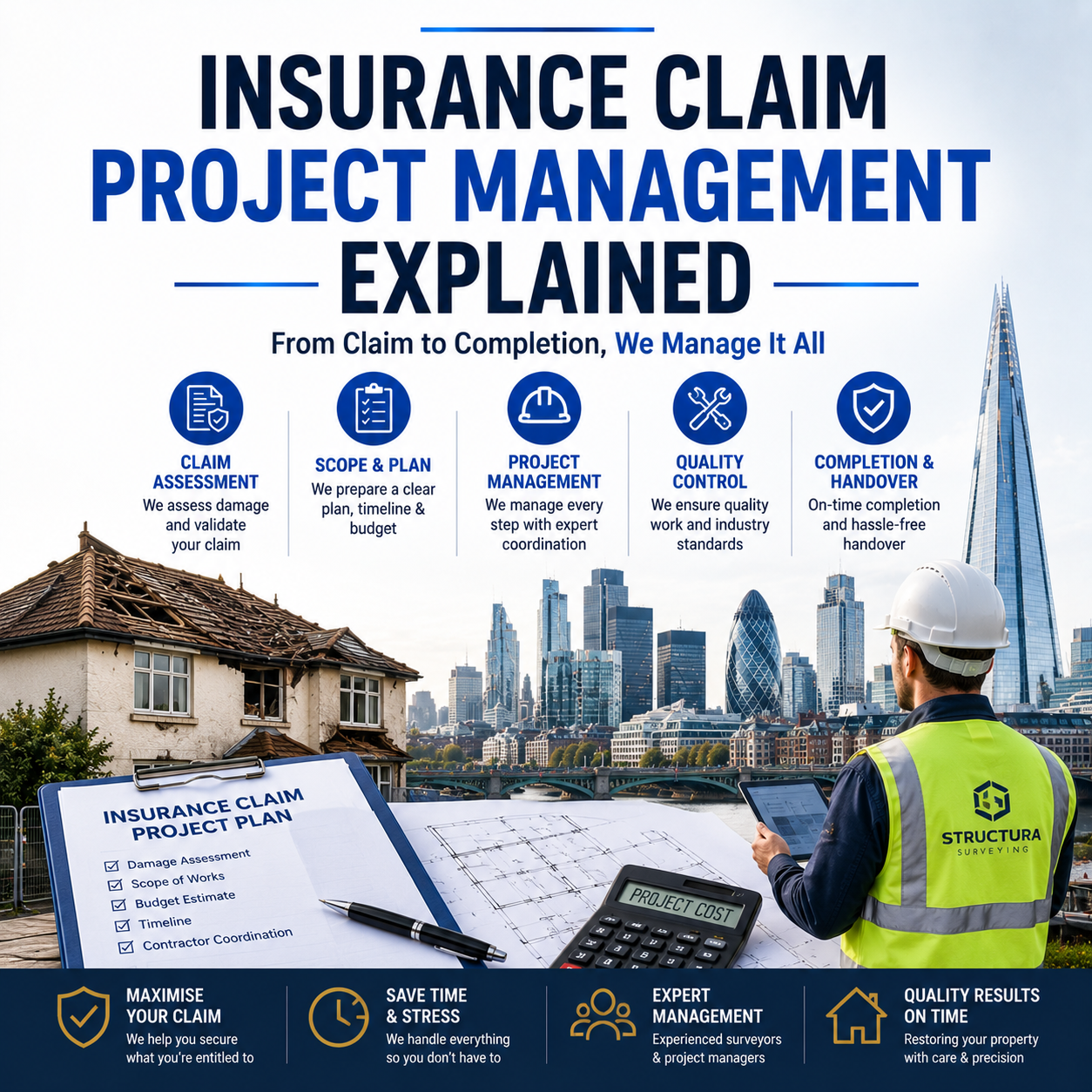
Dealing with an insurance claim after property damage, whether from a fire, flood, storm, or accident, can feel overwhelming. Between assessing the damage, dealing with loss adjusters, sourcing contractors, and keeping the claim on track, it's easy for things to slip through the cracks. This is where insurance claim project management comes in. Insurance claim project management is the process of overseeing every stage of a claim, from initial damage assessment through to final repairs, on behalf of the policyholder. It exists to take the pressure off homeowners and businesses, ensuring the claim moves forward smoothly, fairly, and without unnecessary delays. In this blog, we'll explain how the process works, the tools and documents involved, common issues that arise during claims, and why professional project management makes such a big difference. How Claim Project Managers Assess and Manage a Claim Managing an insurance claim properly involves far more than simply filing paperwork. It's a structured process that requires attention to detail at every stage. Initial Damage Assessment The process usually begins with a thorough assessment of the damage. A project manager, often working alongside a loss assessor or surveyor, inspects the property to understand the full scope of what's been affected, not just the obvious damage, but anything that might be uncovered once repairs begin. Reviewing the Policy in Detail Next, the project manager reviews the insurance policy closely to understand exactly what's covered, what the limits are, and what documentation the insurer will require. This step is crucial, as claims are sometimes underpaid or delayed simply because supporting evidence wasn't presented clearly. Building and Presenting the Claim The project manager then puts together a detailed claim, including cost estimates, damage reports, and photographic evidence. This is presented to the insurer or loss adjuster in a clear, organised way designed to support the strongest possible outcome for the policyholder. Managing Repairs and Contractors Once the claim is agreed, the project manager coordinates the repair work itself, liaising with contractors, checking quality, and keeping the project on schedule. This means the policyholder doesn't have to manage tradespeople or chase progress themselves. Ongoing Communication and Negotiation Throughout the process, the project manager acts as the main point of contact between the policyholder and the insurer, handling negotiations, answering queries, and pushing back where necessary if an offer doesn't reflect the true cost of repairs. Tools and Documents Used in Claim Management Successful claim management relies on solid documentation and the right tools at every stage. Insurance Policy Documents – The foundation for understanding coverage, exclusions, and claim limits. Damage Assessment Reports – Detailed records describing the extent and cause of the damage. Photographic and Video Evidence – Visual proof that supports the claim and helps avoid disputes later. Cost Estimates and Schedules of Work – Clear, itemised breakdowns of what repairs will involve and cost. Correspondence Records – A documented history of all communication with the insurer, useful if a dispute arises. Project Management Software – Used to track timelines, contractor schedules, and claim milestones. Building Surveys – Sometimes required for structural damage, to confirm the full scope of repair work needed. Having these ready and well-organised often makes the difference between a claim that moves quickly and one that stalls. Common Issues That Arise During Insurance Claims Even straightforward claims can run into a few recurring problems. Underestimated Damage Initial assessments sometimes miss damage that only becomes visible once repair work starts, leading to claim revisions later on. Policy Coverage Confusion Policyholders aren't always clear on what their policy actually covers, which can lead to disappointment or disputes over payouts. Slow Insurer Response Times Claims can stall simply due to delays in communication or processing on the insurer's side. Disputes Over Repair Costs Insurers and policyholders sometimes disagree on what a fair repair cost looks like, especially for older or unusual properties. Contractor Coordination Problems Without proper oversight, repair work can be delayed or poorly managed, extending the time it takes to get life back to normal. Incomplete Documentation Missing photos, receipts, or damage reports can weaken a claim and lead to lower payouts or unnecessary back-and-forth with the insurer. Benefits of Professional Insurance Claim Project Management Bringing in a professional to manage a claim offers real, practical advantages. Stronger, Fairer Claims – A well-documented, professionally presented claim is more likely to receive a fair settlement. Reduced Stress – Policyholders don't have to navigate complex paperwork or negotiations alone. Faster Resolution – Experienced project managers know how to keep claims moving and avoid common delays. Expert Contractor Oversight – Repairs are managed properly, reducing the risk of poor workmanship or missed deadlines. Better Financial Outcomes – Professionals often identify costs or damage that might otherwise be overlooked, protecting the policyholder's interests. One Clear Point of Contact – Instead of juggling insurers, adjusters, and contractors separately, everything is managed through a single, coordinated process. Conclusion Insurance claim project management takes the complexity and stress out of what can otherwise be a long, confusing process. From the initial damage assessment through to the final repair, having an experienced professional manage the claim helps ensure a fair outcome, faster progress, and far less hassle for the policyholder. If you're facing a significant insurance claim, working with a dedicated project manager can make a meaningful difference to both the result and your peace of mind. Frequently Asked Questions 1. What does an insurance claim project manager actually do? They oversee the entire claims process, from damage assessment and documentation through to negotiating with the insurer and managing repair work. 2. Do I need a project manager for a small insurance claim? For minor claims, it may not be necessary, but for larger or more complex claims, professional management often leads to a smoother, fairer outcome. 3. How does claim project management help speed up the process? By keeping documentation organised, communication consistent, and contractors coordinated, project managers help avoid the delays that often slow claims down. 4. Can a project manager help if my insurer's offer seems too low? Yes, part of their role is to review settlement offers and negotiate on the policyholder's behalf if the offer doesn't reflect the true cost of repairs. 5. What documents should I keep ready when starting an insurance claim? It's helpful to have your policy documents, photographic evidence of the damage, and any related receipts or reports ready from the start. 6. Does using a claim project manager cost extra on top of my insurance premium? Fees vary depending on the service provider and claim size, so it's worth discussing costs upfront before starting the process. 7. How long does a typical insurance claim take to resolve? Timelines vary widely depending on the complexity of the damage and the insurer's response times, but professional management often helps keep the process on track.
AllJuly 24, 2026July 24, 2026byArslanNo Comments

Insurance Claim Project Management Explained

If you've recently experienced property damage caused by a fire, flood, storm, or another unexpected event, dealing with the insurance claim can quickly become stressful. From arranging inspections and speaking…
Read More
Property Boundary Survey Cost London with professional survey equipment and London skyline.
AllJuly 17, 2026July 17, 2026byArslanNo Comments

Property Boundary Survey Cost London: Complete Pricing Guide for 2026

If you're a property owner in London, you've probably wondered at some point exactly where your land ends and your neighbors' begins. Between tightly packed terraced houses, converted flats, and…
Read More
Boundary Survey Explained: How Surveyors Prove Property Lines in Essex & London
AllJuly 13, 2026July 13, 2026byArslanNo Comments

How Surveyors Prove Boundary Lines in Essex and London Expert Guide 2026

Have you ever looked at your garden fence and wondered whether it's actually in the right place? You're not alone. Across Essex and London, thousands of homeowners face uncertainty about…
Read More
Boundary Disputes in Essex How They Are Resolved
AllJuly 1, 2026July 1, 2026byArslanNo Comments

Boundary Disputes in Essex: How They Are Resolved

Owning a home comes with a lot of pride, but it can also come with a few headaches. One of the most common and stressful issues homeowners face is Boundary…
Read More
Homebuyer report vs building survey comparison for Essex and London homeowners
AllJune 30, 2026June 30, 2026byArslanNo Comments

Homebuyer Report vs Building Survey: Which is Right in Essex?

Buying a home is exciting, but it’s also one of the biggest financial decisions you’ll ever make. Before signing anything, it’s important to understand exactly what you’re buying — and…
Read More
RICS Level 3 Survey Explained: What Homeowners in Essex and London Need to Know
AllJune 27, 2026June 27, 2026byArslanNo Comments

RICS Level 3 Survey Explained for Essex & London Homeowners

Buying a home is exciting, but it can also feel a little scary, especially when you don't know what's hiding behind the walls. That's where a RICS Level 3 Survey…
Read More
What Does a Building Survey Include in Essex and London?
AllJune 22, 2026June 22, 2026byArslanNo Comments

What Does a Building Survey Include in Essex and London?

Buying a home is exciting. It is also one of the biggest decisions you will ever make. Before you sign anything, it pays to know exactly what you are buying.…
Read More
Building Survey Cost in London: A Simple Guide for 2026
AllJune 19, 2026June 19, 2026byArslanNo Comments

Building Survey Cost in London: A Simple Guide for 2026

Building Survey Cost in London: A Simple Guide for 2026 If you're buying a property in London, you've probably heard people say "always get a survey done." It's good advice.…
Read More
Building Survey Cost in Essex: Everything You Need to Know
AllJune 17, 2026byArslanNo Comments

Building Survey Cost in Essex: Everything You Need to Know

Buying a property in Essex is a major investment — and skipping a professional survey can turn that dream into an expensive nightmare. Whether you're purchasing a Victorian terrace in…
Read More
Building Survey Cost in Essex: Everything You Need to Know
AllJune 16, 2026June 17, 2026byArslanNo Comments

Best Building Survey for Old Homes in London A Complete Guide

If you are buying an old home in London, getting the best building survey in London is one of the smartest decisions you can make. Older properties have character, history,…
Read More
1 2

Search

Categories

  • All ( 17 )

Recent Posts

  • Dealing with an insurance claim after property damage, whether from a fire, flood, storm, or accident, can feel overwhelming. Between assessing the damage, dealing with loss adjusters, sourcing contractors, and keeping the claim on track, it's easy for things to slip through the cracks. This is where insurance claim project management comes in. Insurance claim project management is the process of overseeing every stage of a claim, from initial damage assessment through to final repairs, on behalf of the policyholder. It exists to take the pressure off homeowners and businesses, ensuring the claim moves forward smoothly, fairly, and without unnecessary delays. In this blog, we'll explain how the process works, the tools and documents involved, common issues that arise during claims, and why professional project management makes such a big difference. How Claim Project Managers Assess and Manage a Claim Managing an insurance claim properly involves far more than simply filing paperwork. It's a structured process that requires attention to detail at every stage. Initial Damage Assessment The process usually begins with a thorough assessment of the damage. A project manager, often working alongside a loss assessor or surveyor, inspects the property to understand the full scope of what's been affected, not just the obvious damage, but anything that might be uncovered once repairs begin. Reviewing the Policy in Detail Next, the project manager reviews the insurance policy closely to understand exactly what's covered, what the limits are, and what documentation the insurer will require. This step is crucial, as claims are sometimes underpaid or delayed simply because supporting evidence wasn't presented clearly. Building and Presenting the Claim The project manager then puts together a detailed claim, including cost estimates, damage reports, and photographic evidence. This is presented to the insurer or loss adjuster in a clear, organised way designed to support the strongest possible outcome for the policyholder. Managing Repairs and Contractors Once the claim is agreed, the project manager coordinates the repair work itself, liaising with contractors, checking quality, and keeping the project on schedule. This means the policyholder doesn't have to manage tradespeople or chase progress themselves. Ongoing Communication and Negotiation Throughout the process, the project manager acts as the main point of contact between the policyholder and the insurer, handling negotiations, answering queries, and pushing back where necessary if an offer doesn't reflect the true cost of repairs. Tools and Documents Used in Claim Management Successful claim management relies on solid documentation and the right tools at every stage. Insurance Policy Documents – The foundation for understanding coverage, exclusions, and claim limits. Damage Assessment Reports – Detailed records describing the extent and cause of the damage. Photographic and Video Evidence – Visual proof that supports the claim and helps avoid disputes later. Cost Estimates and Schedules of Work – Clear, itemised breakdowns of what repairs will involve and cost. Correspondence Records – A documented history of all communication with the insurer, useful if a dispute arises. Project Management Software – Used to track timelines, contractor schedules, and claim milestones. Building Surveys – Sometimes required for structural damage, to confirm the full scope of repair work needed. Having these ready and well-organised often makes the difference between a claim that moves quickly and one that stalls. Common Issues That Arise During Insurance Claims Even straightforward claims can run into a few recurring problems. Underestimated Damage Initial assessments sometimes miss damage that only becomes visible once repair work starts, leading to claim revisions later on. Policy Coverage Confusion Policyholders aren't always clear on what their policy actually covers, which can lead to disappointment or disputes over payouts. Slow Insurer Response Times Claims can stall simply due to delays in communication or processing on the insurer's side. Disputes Over Repair Costs Insurers and policyholders sometimes disagree on what a fair repair cost looks like, especially for older or unusual properties. Contractor Coordination Problems Without proper oversight, repair work can be delayed or poorly managed, extending the time it takes to get life back to normal. Incomplete Documentation Missing photos, receipts, or damage reports can weaken a claim and lead to lower payouts or unnecessary back-and-forth with the insurer. Benefits of Professional Insurance Claim Project Management Bringing in a professional to manage a claim offers real, practical advantages. Stronger, Fairer Claims – A well-documented, professionally presented claim is more likely to receive a fair settlement. Reduced Stress – Policyholders don't have to navigate complex paperwork or negotiations alone. Faster Resolution – Experienced project managers know how to keep claims moving and avoid common delays. Expert Contractor Oversight – Repairs are managed properly, reducing the risk of poor workmanship or missed deadlines. Better Financial Outcomes – Professionals often identify costs or damage that might otherwise be overlooked, protecting the policyholder's interests. One Clear Point of Contact – Instead of juggling insurers, adjusters, and contractors separately, everything is managed through a single, coordinated process. Conclusion Insurance claim project management takes the complexity and stress out of what can otherwise be a long, confusing process. From the initial damage assessment through to the final repair, having an experienced professional manage the claim helps ensure a fair outcome, faster progress, and far less hassle for the policyholder. If you're facing a significant insurance claim, working with a dedicated project manager can make a meaningful difference to both the result and your peace of mind. Frequently Asked Questions 1. What does an insurance claim project manager actually do? They oversee the entire claims process, from damage assessment and documentation through to negotiating with the insurer and managing repair work. 2. Do I need a project manager for a small insurance claim? For minor claims, it may not be necessary, but for larger or more complex claims, professional management often leads to a smoother, fairer outcome. 3. How does claim project management help speed up the process? By keeping documentation organised, communication consistent, and contractors coordinated, project managers help avoid the delays that often slow claims down. 4. Can a project manager help if my insurer's offer seems too low? Yes, part of their role is to review settlement offers and negotiate on the policyholder's behalf if the offer doesn't reflect the true cost of repairs. 5. What documents should I keep ready when starting an insurance claim? It's helpful to have your policy documents, photographic evidence of the damage, and any related receipts or reports ready from the start. 6. Does using a claim project manager cost extra on top of my insurance premium? Fees vary depending on the service provider and claim size, so it's worth discussing costs upfront before starting the process. 7. How long does a typical insurance claim take to resolve? Timelines vary widely depending on the complexity of the damage and the insurer's response times, but professional management often helps keep the process on track. Insurance Claim Project Management Explained July 24, 2026
  • Property Boundary Survey Cost London with professional survey equipment and London skyline. Property Boundary Survey Cost London: Complete Pricing Guide for 2026 July 17, 2026
  • Boundary Survey Explained: How Surveyors Prove Property Lines in Essex & London How Surveyors Prove Boundary Lines in Essex and London Expert Guide 2026 July 13, 2026
Our Newsletter

Ready to start learn ?

Sign up now!

+(123) 1234-567-8901
Register now
  • Home
  • About Us
  • FAQ
  • Contact Us
Structura Surveying
  • Home Surveys
  • Building Surveys
  • Snagging Surveys
  • Party Wall Surveys
  • Boundary Disputes
  • Drone Surveys
info@structurasurveying.com 01277 549 086
Epping,
United Kingdom

Copyright © 2025 Structura Building Surveyors Ltd. All Rights Reserved. Developed by Devibi with ❤️.