



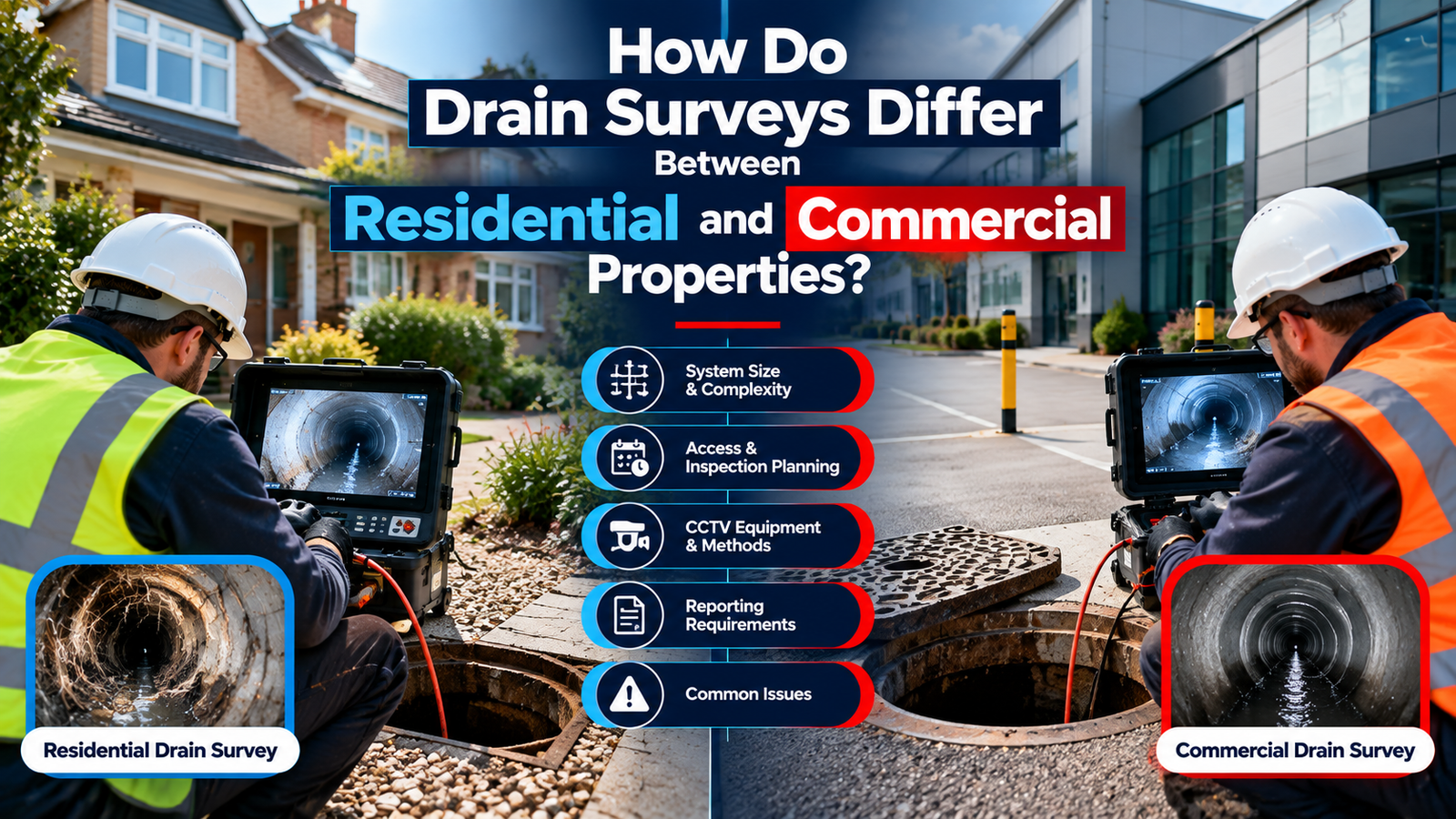
Drainage problems can affect residential homes and commercial premises, but the requirements of an inspection can vary considerably. A homeowner may want to investigate recurring blockages or check the drainage system before purchasing a property. A commercial property manager, meanwhile, may need to assess a larger drainage network, coordinate access around business operations or plan ongoing maintenance.
Understanding the differences between residential and commercial drain surveys can help property owners and managers choose the right inspection and avoid paying for a service that does not address their concerns.
A drain survey is a specialist inspection and is not automatically included in a standard building survey. Depending on the property’s drainage layout and the purpose of the investigation, a specialist may use CCTV equipment to examine accessible pipework and record visible defects.
What Is a Residential Drain Survey?
A residential drain survey is an inspection of the drainage system serving a house, flat or other domestic property.
Homeowners and property buyers may arrange one when they notice recurring drainage problems or want additional information about the condition of underground pipework.
Common reasons for commissioning a residential drain survey include:
- Repeated drain blockages.
- Slow-running sinks, baths or showers.
- Unpleasant smells around drainage points.
- Suspected cracked or damaged pipes.
- Water backing up through drains.
- Concerns about drainage condition before purchasing a property.
- Previous drainage repairs that have not resolved the problem.
Depending on the agreed scope, a drainage specialist may use CCTV equipment to inspect accessible sections of pipework. The inspection can help identify visible issues such as obstructions, cracks, displaced joints, root ingress or signs of deterioration.
The exact findings depend on the condition of the system, access arrangements and the sections that can be examined.
A report should clearly identify which sections were inspected and whether any parts of the drainage network could not be accessed.
What Is a Commercial Drain Survey?
A commercial drain survey is an inspection of drainage infrastructure serving business premises or commercial buildings.
The inspection may be required for offices, retail premises, warehouses, industrial buildings, restaurants, apartment developments or other commercial sites.
Commercial drainage systems can involve multiple drainage routes, shared infrastructure, larger pipework and several access points. However, the actual complexity depends on the property and its drainage layout rather than simply whether the building is commercial.
Common reasons for arranging a commercial drain survey include:
- Recurring drainage problems affecting business operations.
- Suspected damage to underground drainage pipes.
- Blockages affecting multiple facilities.
- Drainage inspections before purchasing commercial property.
- Planned building alterations or redevelopment.
- Routine property maintenance.
- Investigating potential drainage problems affecting surrounding areas.
Commercial inspections may require more detailed planning, particularly where several tenants, departments or site managers need to coordinate access.
The inspection scope should be agreed in advance so that the relevant drainage sections are examined without unnecessary disruption to normal operations.
Key Differences Between Residential and Commercial Drain Surveys
Although both inspection types may use similar CCTV drainage technology, their practical requirements can differ.
1. Size and Layout of the Drainage System
Residential drainage systems generally serve a single home or domestic building. The inspection may focus on the private drainage pipes, connections and accessible chambers associated with the property.
Commercial premises may have more extensive drainage arrangements, depending on the building type and site layout. These can include multiple drainage routes, shared systems and connections serving different parts of a development.
The survey provider should understand the layout before deciding which sections need inspection.
2. Access and Inspection Planning
Access is an important consideration for both residential and commercial drainage inspections.
For a residential property, access may involve external inspection chambers, manholes and suitable drainage entry points.
Commercial sites may require additional coordination involving:
- Property managers and maintenance teams.
- Tenants and other building occupants.
- Site security and access procedures.
- Health and safety requirements.
- Business operating hours.
- Access to shared or restricted areas.
The provider should confirm access requirements before the inspection begins.
3. CCTV Equipment and Inspection Methods
CCTV equipment is commonly used to examine the internal condition of accessible drainage pipework.
A specialist may use appropriate camera equipment to record visible defects and identify obstructions within the inspected sections.
The equipment and inspection method should be suitable for the pipe dimensions, layout and condition.
The purpose of the inspection is to gather evidence about the visible condition of the drainage system. CCTV footage does not automatically establish the cause of every drainage problem or confirm the condition of sections that could not be examined.
4. Reporting Requirements
Residential and commercial drain surveys can also differ in the level of reporting and information required.
A residential property owner may primarily want to understand whether a specific drainage problem has been identified and what action may be needed.
A commercial property manager may need a report that can be shared with maintenance teams, property owners, insurers or other stakeholders.
Depending on the agreed service, a drain survey report may include:
- The property and drainage sections inspected.
- The inspection method and equipment used.
- Visible defects and obstructions.
- CCTV footage or still images, where included.
- Pipe condition observations.
- Access limitations.
- Recommendations for further investigation or repairs.
Ask the provider whether the report includes pipe location information, condition ratings, repair recommendations or a drainage layout plan. These items should not be assumed to be included in every inspection.
5. Business Operations and Maintenance Planning
For residential properties, a drainage inspection is often arranged to investigate a specific concern or support a purchase decision.
Commercial properties may have additional operational requirements. For example, a restaurant, warehouse or office building may need inspection work scheduled to minimise disruption to staff, customers or deliveries.
Where appropriate, commercial property managers may also use inspection findings to plan maintenance and prioritise repairs.
However, a commercial drain survey does not automatically include an ongoing maintenance programme. This should be agreed separately with the drainage provider.
What Should a Drain Survey Report Include?
Before commissioning an inspection, ask the provider what information will be included in the final report.
A suitable report may contain:
1. Inspection Scope
Details of the drainage sections examined and the purpose of the inspection.
2. CCTV Images or Footage
Visual evidence of the accessible pipework, where included in the service.
3. Defect Identification
Observations relating to visible cracks, obstructions, displaced joints, root ingress or other drainage concerns.
4. Pipe Condition Information
Relevant observations about the internal condition of the inspected sections, using the reporting method agreed with the provider.
5. Access Limitations
Details of any areas that could not be inspected and the reasons why.
6. Recommendations
Suggested next steps, which may include cleaning, further investigation, repairs or specialist assessment.
A report should distinguish between observed conditions and conclusions that require additional investigation.
How Can Drainage Defects Affect a Building?
Drainage problems do not always remain limited to underground pipework.
Depending on their location and severity, leaks or damaged drainage systems may contribute to moisture problems, damage to surrounding materials or changes in ground conditions.
For example, leaking underground drains may be relevant when investigating certain cases of foundation movement or subsidence. However, drainage damage should not automatically be assumed to be the cause of structural cracking or movement.
Where wider building damage is suspected, a drainage specialist and a qualified building surveyor may need to assess different aspects of the problem.
A building survey can help assess visible building defects and identify where further specialist investigation may be appropriate.
How to Choose the Right Drain Survey Provider
Selecting a suitable provider is important because the quality and usefulness of an inspection depend on its scope, equipment and reporting.
Before booking, consider asking:
- Does the provider have experience with this type of drainage system?
- Is CCTV inspection included in the quoted service?
- Which sections of the drainage network will be inspected?
- What access arrangements are required?
- Will photographs or video footage be supplied?
- Will the report include defect descriptions and recommendations?
- Are repairs included or quoted separately?
- What happens if a section cannot be inspected?
If you are purchasing a property, also establish whether the inspection needs to cover private drains, shared drainage infrastructure or other sections that may affect the property.
Get the agreed inspection scope and deliverables in writing before work begins.
The Relationship Between Drain Surveys and Building Surveys
A drain survey and a building survey serve different purposes.
A specialist drain survey focuses on the drainage system and uses appropriate inspection methods to examine accessible pipework.
A building survey assesses the wider condition of a property, including visible structural elements, defects and other accessible building components within the agreed scope.
If a property has recurring damp, cracking or suspected structural movement, a building surveyor may recommend additional drainage investigation where the available evidence suggests it could be relevant.
Structura Surveying provides building survey services for property owners and buyers who need professional advice about building condition, defects and potential risks.
You can also read our guide to subsidence cracks and their possible causes, which explains why drainage and ground conditions may be relevant when assessing certain types of property movement.
Why We Need and What is Relationship?
Residential and commercial drain surveys may use similar inspection technology, but their requirements can differ in terms of drainage layout, access, coordination, reporting and the purpose of the investigation.
A residential inspection may focus on a specific blockage, suspected pipe damage or a property purchase. A commercial inspection may involve more extensive planning, multiple access points and reporting requirements for property managers or maintenance teams.
The most important step is to choose a suitably qualified drainage specialist and agree exactly what will be inspected before booking.
Where drainage problems may also be affecting the building itself, professional building surveying advice can help identify whether further investigation is needed.
Frequently Asked Questions
Does a building survey include a CCTV drain survey?
Not automatically. A CCTV drainage inspection is a specialist service and should be confirmed separately with the surveyor or drainage provider.
Are commercial drain surveys always more complicated?
No. Complexity depends on the drainage layout, pipework, access, condition and purpose of the inspection. Some commercial systems are relatively straightforward, while certain residential drainage systems may also present access or technical challenges.
Who should carry out a CCTV drainage inspection?
A suitably experienced and equipped drainage specialist should carry out the inspection. Confirm their experience, inspection method, access requirements and reporting arrangements before booking.
What should a residential drain survey include?
Depending on the agreed scope, it may include CCTV inspection of accessible pipework, images or footage, visible defect observations, access limitations and recommendations.
What should a commercial drain survey report include?
A commercial report may include the drainage sections inspected, inspection findings, relevant CCTV evidence, access limitations and recommendations. The required level of detail should be agreed with the provider.
Can a damaged drain cause subsidence?
In some circumstances, leaking drains can contribute to ground washout or changes in ground conditions that may affect foundations. However, subsidence has several possible causes and requires appropriate professional assessment.
Should I arrange a drain survey before buying a property?
It may be worthwhile if there are signs of drainage problems, previous blockages, suspected damage or specific concerns about the drainage system. A specialist provider can advise on the appropriate inspection scope.
Can a drain survey identify all underground drainage problems?
No. The inspection is limited by access, equipment, pipe condition and the sections that can be examined. The report should explain any limitations and identify where further investigation may be needed.