



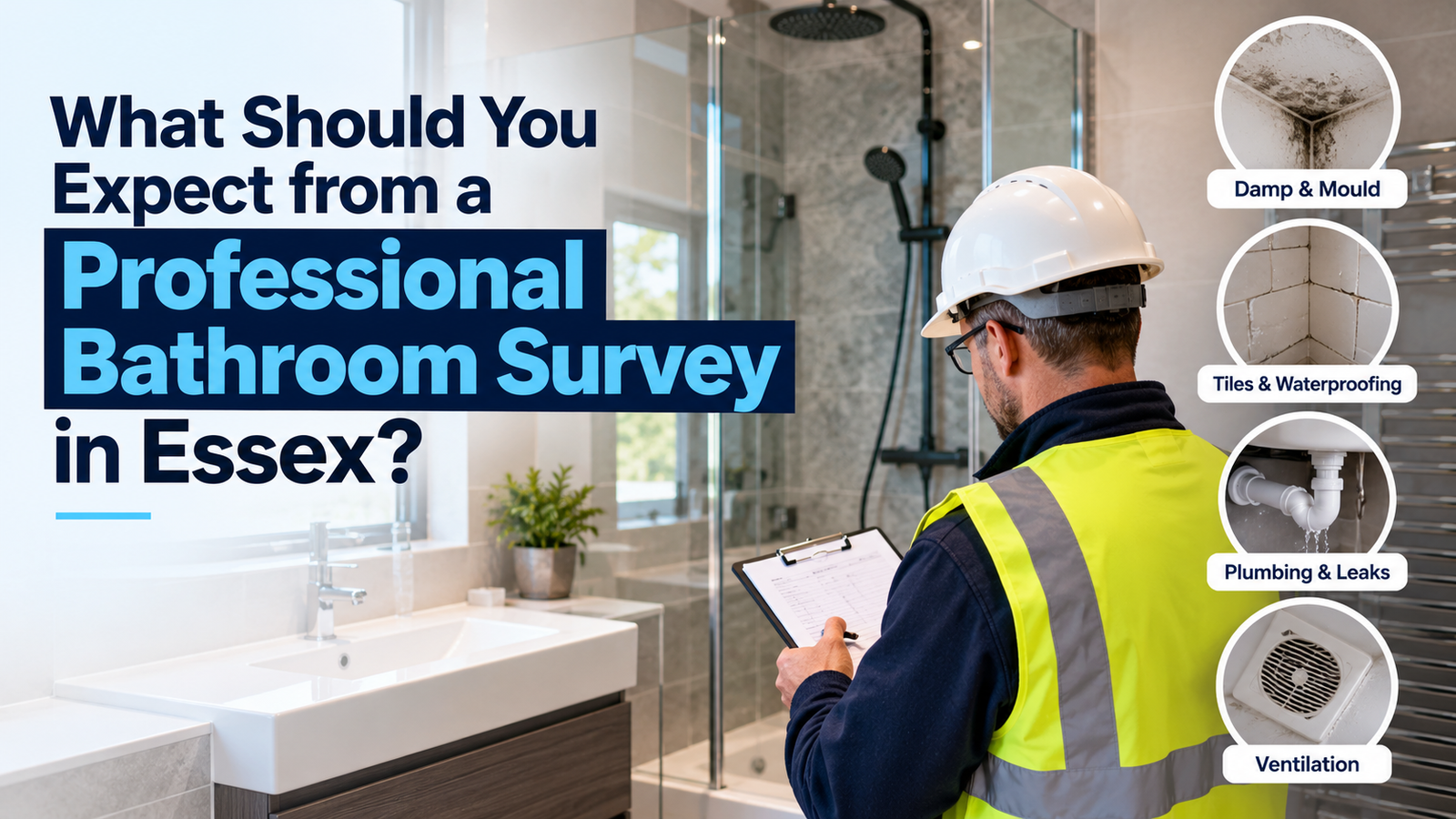
Planning a bathroom renovation or concerned about signs of moisture in your Essex property? A professional survey can help you understand the visible condition of the surrounding building elements before you commit to work. The right inspection depends on the question you need answered: a general building survey is different from a plumbing test, a leak investigation or an invasive inspection.
If you are searching for a professional bathroom survey in Essex, start by explaining the property, the age of the bathroom, any symptoms you have noticed and the decisions you need to make. This helps establish whether a building surveyor is the right professional or whether a specialist contractor is also required.
When might a bathroom survey be useful?
An inspection may be helpful before a substantial renovation, after noticing recurring damp patches, or when you are unsure whether visible deterioration is limited to surface finishes. It can also help a prospective buyer understand visible defects around a bathroom and decide whether further specialist checks are needed.
Common reasons to seek advice include discoloured ceilings, damaged plaster, loose or deteriorating finishes, persistent condensation, poor ventilation, staining near a bath or shower, and signs that water may have affected adjacent walls or floors. These symptoms can have several causes, so they should not be treated as proof of a particular defect without investigation.
What may a surveyor look at?
The inspection scope will depend on the service agreed in advance. A building surveyor may assess accessible and visible elements such as the condition of finishes, visible signs of moisture, ventilation provision, cracking or movement around openings, and the condition of adjoining areas where access allows. The surveyor may also note limitations, including areas hidden behind tiles, fitted units or sealed surfaces.
A visual building survey does not automatically include pressure testing, CCTV drainage inspection, opening up walls, moisture mapping or laboratory testing. If these are necessary, the report should identify the concern and recommend an appropriate next step rather than implying that hidden areas have been fully examined.
What should you prepare before booking?
Before arranging an inspection, gather any previous survey reports, records of leaks or repairs, photographs showing how a defect has changed, and details of planned renovation work. Make a list of the areas that concern you and let the surveyor know whether the property is occupied, whether access is restricted and whether any damage is ongoing.
Ask the provider to confirm the inspection scope, what the written report will cover, whether photographs are included, and which specialist tests are excluded. Clear expectations help you compare services on more than price alone.
What happens after the survey?
A report may describe observed defects, explain their significance within the agreed scope and recommend further investigation or repair advice where appropriate. The next step might be routine maintenance, a specialist plumbing or drainage inspection, a contractor’s quotation, or advice from another qualified professional. The right response depends on the findings and the risk involved.
If the survey identifies a concern that could affect safety or cause ongoing damage, seek appropriate professional advice promptly. Do not cover up active leaks or significant deterioration before the cause has been understood.
Why we Need a Bathroom Survey
A bathroom survey can be useful when you need a clearer picture of visible building defects before renovation or when investigating signs of moisture. The most important step is to choose an inspection that matches the problem and understand its limitations. If you need a broader assessment of a property in Essex, review the scope of a [building survey in Essex](https://structurasurveying.com/service/building-surveys-essex/) or discuss whether a [defect survey in Essex](https://structurasurveying.com/service/defect-surveys-in-essex/) is appropriate.
Frequently Asked Questions
Do I need a survey before renovating a bathroom?
It may be worthwhile if you have noticed defects, moisture damage or uncertainty about the condition of surrounding building elements. For straightforward cosmetic work, a full survey may not be necessary; ask an appropriate professional about the scope required.
Can a survey identify hidden leaks?
A visual survey may identify signs consistent with a leak, but it cannot guarantee that hidden pipework or concealed areas are leak-free. Specialist testing may be required.
Does a building survey include plumbing tests?
Not automatically. Confirm the agreed scope with the survey provider and arrange a qualified plumbing specialist if testing is needed.
When should I contact a specialist?
If there is active water ingress, suspected electrical risk, significant deterioration or a defect outside the surveyor’s scope, contact the relevant qualified professional.