


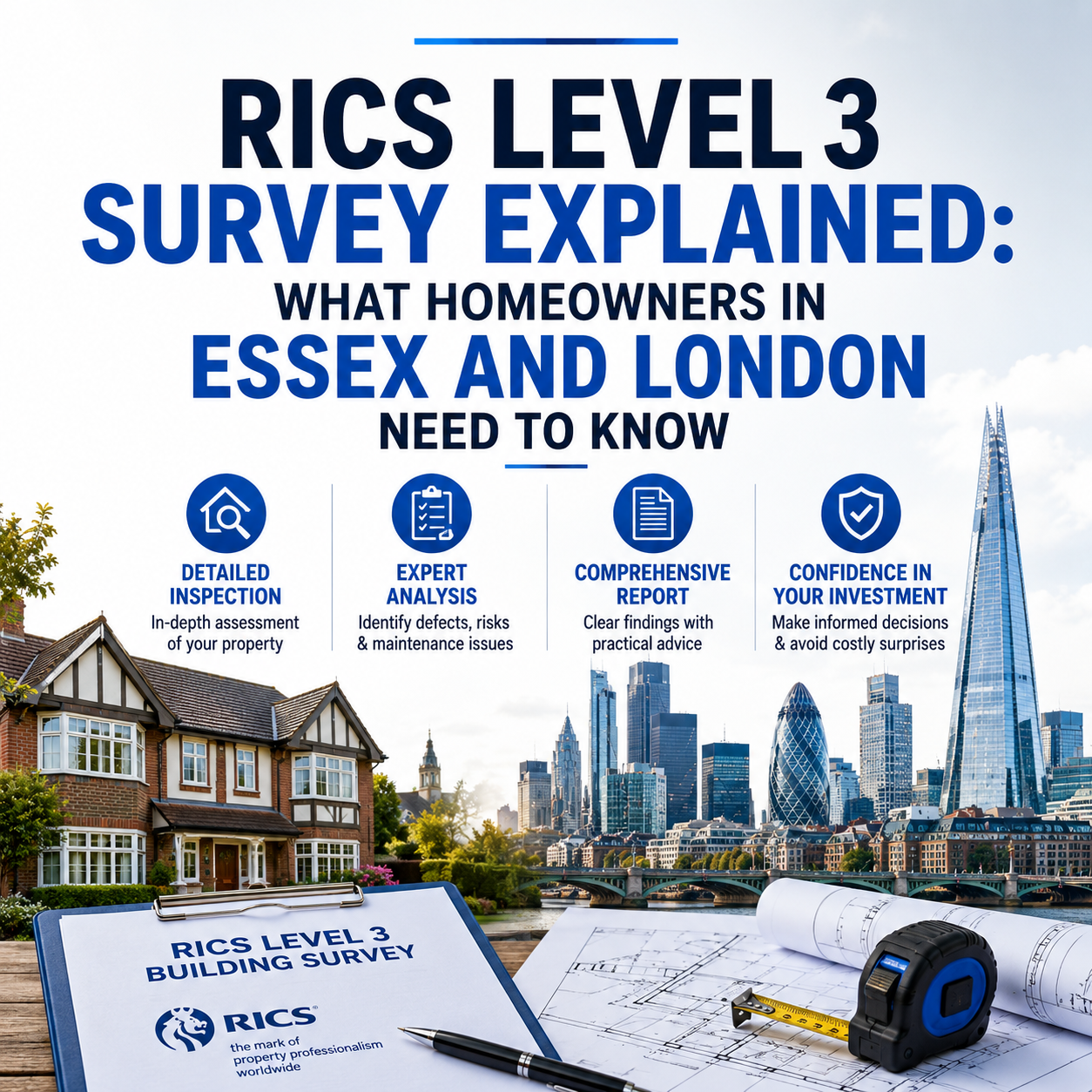
Buying a home is exciting, but it can also feel a little scary, especially when you don’t know what’s hiding behind the walls. That’s where a RICS Level 3 Survey comes in. If you’ve heard the term but aren’t quite sure what it means, don’t worry. In this guide, we’ll break it all down in plain English, so you know exactly what you’re paying for and whether you need one.
What Is a RICS Level 3 Survey?
A RICS Level 3 Survey is the most detailed property survey you can get in the UK. It used to be called a “Full Structural Survey” or “Building Survey,” but RICS (the Royal Institution of Chartered Surveyors) renamed it back in 2021. The survey itself hasn’t really changed — it’s still the deepest, most thorough check a chartered surveyor can carry out.
Think of it as a full health check for a house. A qualified surveyor visits the property and looks at everything they can safely access — the roof, walls, floors, windows, drains, and even areas that are usually hidden, like the loft or under floorboards. They then put everything into a long, detailed report (often 50 pages or more) that explains the condition of the property, any problems found, and what needs fixing.
What Does a RICS Level 3 Survey Include?
A Level 3 Survey covers a lot of ground. Here’s what you can typically expect:
- A full inspection of the structure, walls, roof, chimneys, floors, windows, and doors
- Damp and timber checks, including signs of woodworm or rot
- Drainage and services, such as plumbing, heating, and electrics (visually, not a full technical test)
- Photos of problem areas so you can see exactly what the surveyor is referring to
- Repair advice, often with an idea of how urgent each issue is
- A “traffic light” condition rating for different parts of the house, so you can quickly spot the serious issues
Some surveyors also offer an optional cost estimate for repairs, which can be handy if you’re planning a budget for renovation work.
Who Needs a RICS Level 3 Survey?
Not every property needs this level of detail. A Level 3 Survey is usually the right choice if:
- The property is older (think Victorian, Edwardian, or pre-war homes, which are common across Essex and London)
- It’s a listed building or has unusual construction
- The home has had major extensions or alterations
- You’ve already noticed cracks, damp patches, or signs of movement
- You’re planning to renovate and want to know exactly what you’re dealing with
- You simply want complete peace of mind before signing on the dotted line
If you’re buying a fairly new, standard-build home in good condition, a Level 2 Survey might be enough. But for anything older, bigger, or a bit unusual, Level 3 is the safer bet.
Benefits of Getting a RICS Level 3 Survey
It might feel like an extra expense on top of everything else when buying a home, but here’s why it’s usually worth it:
- You avoid nasty surprises. Hidden issues like subsidence, damp, or roof damage can cost thousands to fix. A survey helps you spot them before you buy.
- You can negotiate the price. If the survey uncovers problems, you may be able to ask the seller for a lower price or for repairs to be done first.
- You understand the true cost of ownership. Knowing what repairs are coming up helps you plan your finances properly.
- You get expert, unbiased advice. RICS surveyors are independent and regulated, so you know you’re getting an honest opinion, not a sales pitch.
- It gives you confidence. Whether you walk away from a bad deal or move forward with full knowledge, you make the decision with your eyes open.
Typical Cost of a RICS Level 3 Survey in Essex and London
Cost is usually the first question people ask, so let’s keep it simple.
Across the UK, a Level 3 Survey generally costs somewhere between £600 and £1,500, with the average sitting around £800–£900. The final price depends on the size, age, and value of the property, plus how complex the job is.
In Essex, you can typically expect to pay somewhere in the region of £650 to £1,200, depending on whether you’re buying a smaller terraced house or a larger detached period property.
In London, prices tend to run a bit higher — roughly £800 to £1,800 — mainly because property values are higher and surveyor demand is greater. Central London and properties with listed status or unusual layouts often sit at the top of that range.
A few things that can push the price up or down:
- Property size (more rooms = more time on site)
- Age of the property (older homes take longer to inspect properly)
- Listed building status
- Whether you add extras like repair cost estimates
It’s always worth getting a couple of quotes from RICS-regulated surveyors before booking, just to compare and make sure you’re getting fair value.
Frequently Asked Questions
- How long does a RICS Level 3 Survey take? For an average-sized home, the surveyor usually spends half a day to a full day on site. Larger or more complex properties, like big period homes, can take longer. The written report is normally sent within 5–10 working days after the inspection.
- Is a RICS Level 3 Survey the same as a valuation? No. A Level 3 Survey focuses on the condition of the property, not its market value. If you also want a valuation, you’ll need to ask for it as an add-on, usually for an extra fee.
- Can I use the survey to negotiate the house price? Yes, this is one of the main benefits. If the report flags issues like damp, roof damage, or structural movement, you can use this to ask the seller for a price reduction or request repairs before completing the purchase.
- Do new-build homes need a Level 3 Survey? Usually not. New-build properties are generally fine with a Level 1 Condition Report or a snagging survey, since there’s less wear and tear to worry about. Level 3 is mainly for older or more complex homes.
- Is a RICS Level 3 Survey worth it for a flat? It depends on the building. If it’s a converted period property or has shared structural elements, a Level 3 Survey can still be useful. For a modern, purpose-built flat, a Level 2 Survey is often enough.
- Who carries out a RICS Level 3 Survey? Only a RICS-accredited Chartered Surveyor can carry one out. You can check a surveyor’s credentials on the official RICS “Find a Surveyor” tool before booking.
- What happens if the survey finds a serious problem? You’re not obligated to go ahead with the purchase. Many buyers use serious findings to renegotiate, request further specialist inspections (like a structural engineer’s report), or in some cases, walk away from the deal entirely.
Are You Looking for Expert ?
A RICS Level 3 Survey isn’t the cheapest option, but for older properties, listed buildings, or homes with visible issues, it’s often one of the smartest purchases you’ll make during the buying process. It can save you from costly surprises down the line and gives you real confidence in your decision.
If you’re buying in Essex or London and unsure which survey level suits your property, it’s a good idea to chat with a local RICS-accredited surveyor. They can look at the specific home you’re interested in and recommend the right level of detail for your peace of mind.